A very elegant and decent brand building commercial by Louis Vuitton. One sentence strikes me: "A journey does not only show us the world, but how we fit in." If there is one aspect that luxury companies have neglected in Japan, then it is the cultural context, to study the setting, the broader context, societal rules, finer shades of meaning and semiotics. Luxury is social, it is cultural. Brands tend to ignore cultural changes and the meanings that brands can construct within them. "As long as it works, ..." the message of A CEO from a luxury company selling with great success in the Japanese market. But why does it work? What does this mean? What do customers think about your brand, about your products? If you would ask ten companies if they are sure about what their own customers are really thinking about them, what associations they connect with the brand, you would probably get ten negative responses. Marketing experts in Japan tend to guess. They give up on the possibility to really understand the dynamics that govern luxury consumption in Japan.
Understanding what position the customer holds in the brand image, what he thinks and feels when purchasing, what impression a customer has when she clings to her bag to provide her with social security, with acceptance within her peer group network... There are many opinions, many surveys that barely scratch the surface due to organizational constraints. Nearly no one makes the effort to ask the customer. Directly. Focus groups are not the same as engaging in conversations.
Luxury brands should take the journey themselves, into the shopping jungle of Tokyo. Enter Lumine in Shinjuku with a student and ask her to describe which shop means what to which customer. Ask the office lady during lunch time, in which shopping district she shops for her favorite brand bag and why she is not fond anymore of LV or Gucci, but now prefers Chloé and Marc Jacobs. Ask her why. Ask her when it happened. Ask her what her friends are thinking, what magazines they read. Enter their minds. Find out, discover where your brands are positioned in the world of your customer. Make the journey.
There is a way to enter the minds of Japanese consumers, to engage them with the brand, to make the brand part of their lifestyles, thoughts and dreams. To do so, you have to understand the journeys they want to take, the daily cultural patterns, their dreams and the power of social gratification and stratification at work every day, through all age groups and parts of society. There are patterns that want to be discovered. Don't spend your time in the office. Start the day as a marketing expert by drinking coffee in Omotesando, watch people, talk to them, engage them. Say goodbye to corporate structure and educate yourself, taking the best source available: the consumers.
The defining attribute of services for rich people in Japan has been the face to face interaction in exclusive shops not meant for the normal middle class consumer. Before the economic bubble in the 1980s, luxury companies were defining their customers predominantly by income level. Their numbers were therefore fixed to a small elite and business could not be expanded beyond this scope without the danger of losing exclusivity. With the commodification of luxury and rising mass affluence, a change in the perception of the term occurred (Takahashi 2005: 10). In recent years the long taken-for-granted distinction between domestic and foreign brands is blurring and there is a greater tolerance for nontraditional lifestyle paths (Nikkei Weekly, July 16th, 2007, Debbie Howard, Japan's evolving consumer psyche creating opportunities, p. 32; Hirano and Miles 2006). Luxury consumers are turning into unpredictable shoppers that combine different brands and styles to form distinctive and personal lifestyles, and in response to that the variations between offerings are becoming ever more subtle (SIGMA 2005: 10; see also Ishiwata 2006: 7; Nunes et al. 2004: 57). A new demand for authenticity, corporate social responsibility (CSR), and an increasing translation of culture and arts into consumer products indicate a shift away from simple conspicuous consumption towards informed consumption (Currid 2007: 36; see also Scott 2000; Anterior Insight 2008; Nikkei Weekly, October 15th, 2007: 26). Global Insight predicts that premium brands will grow 89.3% in Japan between 2005 and 2010, while volume brands will only grow 0.9% in the same period (Treece 2006). How can such an expansion in the luxury market be explained? Takahashi (2005) notes that if we take a look at the statistics of high taxpayers in Japan the market of rich people is expanding, but not in a way that would justify the rise in luxury sales that was experienced in the last decade. These new consumption patterns are attributed to the appearance of the “new rich” who, as a market, hold tremendous potential for luxury companies. The transformation of wealth from the traditional old rich families of entrepreneurs and real estate owners, to the newly affluent young business professionals, IT-entrepreneurs and retirement rich happened within the last 15 years, during and after the economic bubble of the 1980s. As their major share of profit now comes from a much more diversified consumer, many premium companies that used to sell to a conservative, elitist, and upper-class group of luxury customers now face the challenge of how to satisfy the new demand for mass luxury while at the same time taking care not to devaluate the brand and lose their more upscale clients. I will argue that because of these developments, premium companies have to change their relationship with their most valuable customers: from an impersonal to one that will create the opportunity for long-term cooperation and trust. New ways to transmit an image of exclusivity are needed to keep the aspirational appeal of brands and products. The affluent consumers have become increasingly immune to the normal channels of mass marketing and now demand real communication and added value. In order to reach them, luxury companies have to get access to the most exclusive of all marketing environments: personal communication between consumers about luxury brands (word of mouth). The paper is structured as follows: Paragraph 2 introduces briefly customer groups that are of special interest within “new rich” market. Paragraph 3 deals with marketing issues. Section 3.1 and 3.2 explain the basic approach to luxury marketing. Section 3.3 introduces companies that are essential cooperation partners for a successful strategy within the Japanese premium market and outlines the importance of creating a marketing environment for the most exclusive customers. In section 3.4 I will explain how to work with word of mouth marketing techniques in a HNWI environment.
Creating shopping environments, fully developed experiences and personalized services for consumers is a global trend that has come to Japan (Howard 2006). The expectations that affluent consumers have for their retail environments are increasing. The loyalty of customers is depend on the efforts made by brands to create variety and creative ways to set themselves apart from competitors. Consumers will easily switch to other retailers and brands, if they fail to invest in the creation of meaningful relationships with them (Allen and Rigby 2005; Japan Times, October 15th, 2007: Upscale saloons pamper rich: 20). Many foreign luxury companies still have problems in adapting to the high service requirements demanded by the Japanese and to express luxury at all levels of the product purchase process, including the aftersales experience. A brand is not only shaped by its products but also by the staff, location and promotional campaigns (Japan Times, June 23rd, 2007: Handbag entrepreneur owes success to quality, celebrities), and these are becoming more diversified in Japan. There are a lot of examples for creative ways in which both foreign and domestic brands are trying to lure consumers into their stores by refining their premium offerings and the surrounding in which to present them.
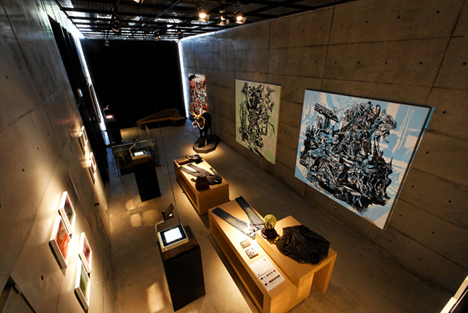
One example is an increasing translation of culture into consumer products. Cultural and intellectual engagement becomes the benchmark for consumers as displays of knowledge, connoisseurship, and education. The new consumer has an increasing interest in arts, book purchases, and cultural consumption as these activities indicate the individual's high IQ and social consciousness. Such products appeal primarily to a rising class of affluent culture chasers, “[...] people who are very focused on having those hip luxury signifies. Owning such products signifies informed consumption.” (Currid 2007: 36; see also Scott 2000; Anterior Insight 2008; Nikkei Weekly, October 15th, 2007: 26) Artists' unions with luxury brands are becoming increasingly common and profitable, using a different kind of celebrity, an art star, to be perceived as cutting edge. Yves Cartelle, president of Louis Vuitton remarks: “If you look at the world of art, people interested in contemporary art, they are usually interested in luxury. The bridge between the two worlds is more and more obvious.” (New York Times, November 8th, 2007, The Artist's Fall Collection)
Diesel Denim Gallery in Tokyo, Aoyama mixes avant-garde art with a selection of premium Diesel clothes. “Instead of going to sign a deal with a famous artist [...] we think that if we start from scratch and build a relationship with new upcoming talent, we can gain status.” (Japan Times, August 23rd, 2007, Staying casual in Minami-Aoyama) Other fashion luxury brands to co-opt the art world include Paul Smith(http://www.paulsmith.co.uk/personal/space-gallery/, accessed 20.01.2008. The shop is spread over 4 floors with a gallery set on the 4th Floor. In the ‘Space’ Gallery, a varied line up of British and European artist, photographers, and product designers are exhibited. See SuperFuture Online, http://www.superfuture.com/city/reviews/review.cfm?ID=309, accessed 20.01.2008), Gucci and Louis Vuitton, with its famous “The Culture of Branding” show in collaboration with the artist Murakami Takashi. Currid (2007) considers these cooperations built on the fact: “[...] underneath the glamour and frivolity of art and culture are real social and economic mechanisms [...]” (Currid 2007: xi) Other concepts include to move a whole brand upscale, as seen in the case of Isetan, a department store targeting male customers. By lining up high-end items on the top-floor of their store in Shinjuku as though they were museum pieces, they want to attract customers. The idea proved extremely successful by adjusting the product portfolio to the middle-aged male customer who seeks to make a fashion statement (The Nikkei Weekly, November 5th, 2007, Retailer finds way into men's wallets: 20). Ace Gene started in February 2007 to polish its luxury image and achieved a big increase in its profit margins by equally moving upscale (The Nikkei Weekly, September 3rd, 2007, Sales gains of 10% are for sissies, p. 21. After opening its Hibiya flagship store, Ace Gene discontinued internet sales and stopped marketing through general merchandise stores, increasing the luxury image. Prices were raised by 25%. Domestic sales from February to June were 80% higher). Baccarat Pacific K.K., a subsidiary of a major crystal ware maker from France, has been showing rapid growth after changing its brand strategy from a producer of dish wares to a luxury brand. The brand created an environment which made the buying process more of a lifestyle experience (The branches in Marunochi and Roppongi are examples where this has been implemented. See The Nikkei Weekly, Baccarat Pacific K.K., March 26th, 2007, p. 20. Baccarat experienced a 300% sales gain from 1996 to 2006. The new strategy tried to nurture Baccarat as a luxury brand that serves many aspects of the customers' lifestyles. Some stores are now equipped with trendy bars where visitors have the opportunity to enjoy drinking with the glasses they choose. The bartenders are trained with product specific information and in the history of the brand).
The creation of flagship stores of European luxury brands started in 2001 with the $138-million La Maison Hermes and since then other luxury brands have followed the trend of engaging top architects to create spectacular shopping palaces. “Japanese refinement of the retail experience plus a general lack of attachment to old structures drives a style of shop development that has produced some of the new architectural temples of the century.” (Superfuture superguide Tokyo, online, http://supertalk.superfuture.com/supershop/superguides/superguides-tokyo.php, accessed 20.10.2008) The latest overseas brands to appear in the upscale shopping district of Ginza were Bulgari and Armani, both in November 2007. Having a presence in Tokyo is considered an important part in the image-creation and also a jumping point to other Asian luxury markets (Japan Times, October 15th, 2007, Upscale saloons pamper rich: 52). Luxury brand online stores have created services for customers that are beyond the scope of the average shopping site on the internet. It becomes more important for luxury brands and fashion houses to improve their presence known online, leading to the emergence of a new generation of virtual Japanese shopping towns (Examples are megaseek for men/mfm, select square, zozoresort, and 109 men's net, see “Virtual Luxury”, Anterior Insight 2008. Fendi launched on September 2006 a 15 seconds Video Ad exclusively on style.com, making a step away from print advertising on billboards and in magazines. Virtual shopping itself to become the new retail medium for many high fashion and luxury brands). Luxury companies should devise creative ways in which they can take shopping out of the usual context, giving consumers the opportunity to discover new things and experiences. In this way luxury brands are connected with emotional values of diverse consumer lifestyles by connecting with the specific 'triggers' that make a consumer's brand experience enriching and unique (The Financial Times, September 9th, 2007, What luxury means now; “Convenience Luxury”, Anterior Insight 2008; Danziger 2005: 30; Graham and Matthews 2004).
 A very elegant and decent brand building commercial by Louis Vuitton. One sentence strikes me: "A journey does not only show us the world, but how we fit in." If there is one aspect that luxury companies have neglected in Japan, then it is the cultural context, to study the setting, the broader context, societal rules, finer shades of meaning and semiotics. Luxury is social, it is cultural. Brands tend to ignore cultural changes and the meanings that brands can construct within them. "As long as it works, ..." the message of A CEO from a luxury company selling with great success in the Japanese market. But why does it work? What does this mean? What do customers think about your brand, about your products? If you would ask ten companies if they are sure about what their own customers are really thinking about them, what associations they connect with the brand, you would probably get ten negative responses. Marketing experts in Japan tend to guess. They give up on the possibility to really understand the dynamics that govern luxury consumption in Japan.