The middle-class consciousness that Japan was so famous for is being questioned. In the midst of this hype further confusion is caused by a perceived breakdown of traditional values such as the lifelong employment and the seniority based wage system. These changes are more than a trend or fashion. They are part of the social and demographic changes in Japan and the rest of the world, connected to such phenomena as the information age, the retirement waves of the baby boomer generation, the rising affluence among consumers, and the disappearance of clear segmentations. All these factors have led to a much more diversified surrounding for marketing products, and transformed the consumer with modest influence into a sophisticated and discerning consumer with substantial buying power (Silverstein and Fiske 2005: 9).
The term kakusashakai 格差社会, meaning a society with an income gap, has become a buzz word with political relevance. In the “lost decade” of the 90s, after the bursting of the asset price bubble, increasing social inequalities began to surface, betraying the international image of Japan as a country of equality and a population where 90% are seeing themselves belonging to the middle-class. A change in the demographic structure of an aging society with a declining birthrate can lead to a consciousness of perceived inequality (If we take a closer look at the development of the Gini coefficient, we can see that about 90% of the change in the last 10 years can be attributed to factors other than an actual change in income, namely the impact of changes in household membership and the aging population of Japan. For contemporary discussions on this topic see Tachibanaki 2005; Sugimoto 2003; Nihonsôgôkenkyûsho 2006; Hayashi 2005, and also Hashimoto 2006. The image that 90% of the Japanese used to view themselves as belonging to the middle class is analyzed critically by Sugimoto 2003: 35-46). Although the economy might have regained momentum and salaries are about to rise, this is not true for most of the part-time workers, leading to a strong polarization of living standards (Nikkei Konwakai 2005).
The transition from the bubble economy to the long economic slump, and now back to an economy of regained strength, left an enormous impact on the mind set of Japanese people (McCreery 2000: 29). The terms kachigumi (winners) and makegumi (losers) have appeared in the media and illustrate how Japanese see the effects of the “lost decade” on their society. In reality, the word kachigumi refers to at the most 1% of the Japanese population, but since these people are featured frequently on TV and in magazines, they appear to be a much larger group. Furthermore, the media portrays kachigumi-lifestyle as accessible to everyone, which has led to a perceived change in lifestyle role-models. Being a salaryman in a prestigious corporation has lost part of its appeal (Hui 2006: 42). After being disillusioned by the economical recession, continuing social turmoil have led to a desire for stability in Japan, where companies used to be the provider of social security. With additional impact arriving in recent years from global competition, and the anticipation of a time when performance is rewarded and not being persistent in adapting to predifined patterns of social selection, taking their lives into their own hands is becoming the new trend among consumers. Hakuhodo (2006b) sees people having developed a “creative sensibility” during the years of the “lost decade”, a kind of adaptive skill for consolidating and rebuilding their lives, giving way to the pursuit of distinctive lifestyles. Consumption in Japan has become more symbolic and meaningful, in contrast to the mass consumption, mass production times of the 1980s. Its is now a way to construct a personal identity.
Wednesday, August 6, 2008

“New luxury” and “trading-up” in Japan
When it comes to purchasing decisions, consumers are becoming more and more unpredictable, tending to make judgements based on their own standards and peculiarities in taste instead of going conformist. They pay for individual lifestyles as a way of giving themselves identities, and in many cases prefer products because of their fascination for the design that fits their personality. This kind of aesthetic fascination has become a key trend throughout all product categories, an “aesthetization of consumption,” with distinctions between offerings becoming increasingly subtle, requiring clearer messaging and positioning than before (SIGMA 2005: 10; see also Ishiwata 2006: 7; Nunes et al. 2004: 57). The distinction between domestic and foreign brands is blurring, the variability in stores is increasing, and the fixation on foreign luxury brands is loosening. Brands are no longer the main factor in consumer choices and there is a greater tolerance for nontraditional lifestyle paths (Nikkei Weekly, July 16th, 2007, Debbie Howard, Japan's evolving consumer psyche creating opportunities, p. 32; Hirano and Miles 2006).
In the 2005 issue of the Nikkei hit product ranking, the first two places are made up by products situated in the upper and lower price categories. An increasing number of people spend big sums in areas emotionally important to them, while economizing in other areas, seeking harmony between luxury and low cost prices (Nikkei Konwakai 2005; Ishiwata 2006: 9; Danke 2005: 8; Chadha and Husband 2006: 60). This kind of consumption polarization was named “trading-up” by Silverstein and Fiske (2005), who identified it as a global phenomenon. While the trend in America may have slightly different underpinnings, the basic structure of the amassed wealth is the same in Japan. The relative nature of needs and wants and the relative elasticity of discretionary income are the basic principles of the trading-up phenomenon. Every consumer has a different idea of what is necessary for him and what he is willing to spend (Silverstein and Fiske 2005: 22; Shiozaki et al. 2005).
“New luxury” is a major and growing segment of the economy. While old luxury was defined by the object itself, its intrinsic qualities, new luxury is defined from the way the consumer is experiencing it, creating a personal, consumer-centric dimension of luxury. Companies that create new luxury products have constantly outperformed their competitors, and the segment is expected to reach $2 trillion globally by the end of the decade. More and more consumer good categories polarize by trading-up and trading-down, and companies that fail to differentiate their offerings by either lower price or added value get stuck in the middle, losing considerable market share (Silverstein and Fiske 2005: 55-58, 274: “There are many proud and currently successful companies with wonderful histories who are choosing to ignore the new luxury phenomenon, but they do so at their own peril.”; See also Danziger 2005: 19).
Luxury marketers must look at their products as the delivery mechanism through which they transmit a luxury experience to the consumer. Luxury today is about expert and insider knowledge, about sophistication and not simply the flaunting of status brands. Japan has reached a stage that Anterior Insight has named “conspicuous abstention”, where consumers become more refined and discerning, actively choosing their brands and the combination in which to add them selectively to their lifestyle (Anterior Insight 2008).
All these developments mean that success in the premium segment depends more and more on understanding the psyche and values of a fragmented marketplace. Japanese consumers accumulate products from different categories and price levels, creating a “consumption constellation.” Products help consumers to buy a link into a chain of associations by the means of a lifestyle shopping (Danziger 2005: 27; Graham and Matthews 2004). They are aware of the fact that brands provide “a reasonably reliable, efficient, and consistent method for signaling others” about who they are or who they would like to be (Silverstein and Fiske 2005: 49). Delayed marriage leads to a longer active and sophisticated dating culture where people are displaying taste, knowledge, and values through the products they are consuming, and which may therefore be considered more of an investment than simply conspicuous consumption. Shopping experiences become dating conversations, a nonverbal method of self-expression and social dialogue about the complexity, variation and subtlety in new luxury goods (Silverstein and Fiske 2005: 30, 51; Frank 2000).
In the 2005 issue of the Nikkei hit product ranking, the first two places are made up by products situated in the upper and lower price categories. An increasing number of people spend big sums in areas emotionally important to them, while economizing in other areas, seeking harmony between luxury and low cost prices (Nikkei Konwakai 2005; Ishiwata 2006: 9; Danke 2005: 8; Chadha and Husband 2006: 60). This kind of consumption polarization was named “trading-up” by Silverstein and Fiske (2005), who identified it as a global phenomenon. While the trend in America may have slightly different underpinnings, the basic structure of the amassed wealth is the same in Japan. The relative nature of needs and wants and the relative elasticity of discretionary income are the basic principles of the trading-up phenomenon. Every consumer has a different idea of what is necessary for him and what he is willing to spend (Silverstein and Fiske 2005: 22; Shiozaki et al. 2005).
“New luxury” is a major and growing segment of the economy. While old luxury was defined by the object itself, its intrinsic qualities, new luxury is defined from the way the consumer is experiencing it, creating a personal, consumer-centric dimension of luxury. Companies that create new luxury products have constantly outperformed their competitors, and the segment is expected to reach $2 trillion globally by the end of the decade. More and more consumer good categories polarize by trading-up and trading-down, and companies that fail to differentiate their offerings by either lower price or added value get stuck in the middle, losing considerable market share (Silverstein and Fiske 2005: 55-58, 274: “There are many proud and currently successful companies with wonderful histories who are choosing to ignore the new luxury phenomenon, but they do so at their own peril.”; See also Danziger 2005: 19).
Luxury marketers must look at their products as the delivery mechanism through which they transmit a luxury experience to the consumer. Luxury today is about expert and insider knowledge, about sophistication and not simply the flaunting of status brands. Japan has reached a stage that Anterior Insight has named “conspicuous abstention”, where consumers become more refined and discerning, actively choosing their brands and the combination in which to add them selectively to their lifestyle (Anterior Insight 2008).
All these developments mean that success in the premium segment depends more and more on understanding the psyche and values of a fragmented marketplace. Japanese consumers accumulate products from different categories and price levels, creating a “consumption constellation.” Products help consumers to buy a link into a chain of associations by the means of a lifestyle shopping (Danziger 2005: 27; Graham and Matthews 2004). They are aware of the fact that brands provide “a reasonably reliable, efficient, and consistent method for signaling others” about who they are or who they would like to be (Silverstein and Fiske 2005: 49). Delayed marriage leads to a longer active and sophisticated dating culture where people are displaying taste, knowledge, and values through the products they are consuming, and which may therefore be considered more of an investment than simply conspicuous consumption. Shopping experiences become dating conversations, a nonverbal method of self-expression and social dialogue about the complexity, variation and subtlety in new luxury goods (Silverstein and Fiske 2005: 30, 51; Frank 2000).
LOHAS and CSR
A major trend is to see luxury as an enrichment of life, a means to deliver new experiences, and satisfy the consumer's curiosity for adventure and exoticism. Experiences are seen as the real luxury—exotic holidays, authenticity, environmental consciousness, in general a trend toward informed consumption (Silverstein and Fiske 2005: 45, 47). Corporate social responsibility (CSR) is gaining importance in purchasing decisions. This change in preferences demands know-how, intelligence, and education and underwrites the above mentioned change in social status markers. Japanese consumers are aiming for a return to a natural and simple lifestyle, with time for taking care of oneself and the family. Eating well, natural and organic food, spas and wellness holidays are no longer only for the elite and superrich.
The trend is to seek eco-friendly and slower lives. The health care market is expanding rapidly, with a trend towards preventive health care (Naikakuhu [Cabinet Office of the Japanese Government] 2005. For an estimated size of the health care market see METI [Ministry of Economy, Trade and Industry] 2005). The idea of LOHAS (lifestyle of health and sustainability) has become a buzz word, and represents a 540 billion global market. It is linked with so-called “cultural creatives”—people who are starting to value health, social issues, and other aspects of life that aren't directly linked with past patterns of materialistic consumption. The concept is going mainstream in a much bigger way in Japan than in the U.S. As Peter D. Pedersen of E-Square Inc., a company that offers consulting on the concept of LOHAS in Japan, puts it, the timing was right: ”People who lost after the burst of the bubble were looking for an alternative that went beyond the power of money, [...]” something that offers them emotional engagement. For people who do not want to consume emotionally empty goods, socially responsible consumption (SRC), LOHAS and CSR are serving as a psychological antidote for an increasingly stressful world (Japan Times, June 6th, 2006: Gentler ecological lifestyle, products catching on in Japan; Ray 2001; Silverstein and Fiske 2005: 30; Nikkei Weekly, October 15th, 2007: 26). With the number of scandals of big companies increasing, integrating CSR into corporate strategies is becoming more important and represents a powerful tool for corporate image building for firms, showing that they are an integral part of the social and economic world in which they operate (Ota 2006: 17; Japan Close-Up 2006: 11, 19; Ishiwata 2006: 8.; The Nikkei Weekly, November 26th, 2007: 28; Kotler and Lee 2004; The Nikkei Weekly 2007: Fair trade reaches out to Japanese consumers, 26.02.2007: 31; Kotler and Pfoertsch 2006: 302).
The trend is to seek eco-friendly and slower lives. The health care market is expanding rapidly, with a trend towards preventive health care (Naikakuhu [Cabinet Office of the Japanese Government] 2005. For an estimated size of the health care market see METI [Ministry of Economy, Trade and Industry] 2005). The idea of LOHAS (lifestyle of health and sustainability) has become a buzz word, and represents a 540 billion global market. It is linked with so-called “cultural creatives”—people who are starting to value health, social issues, and other aspects of life that aren't directly linked with past patterns of materialistic consumption. The concept is going mainstream in a much bigger way in Japan than in the U.S. As Peter D. Pedersen of E-Square Inc., a company that offers consulting on the concept of LOHAS in Japan, puts it, the timing was right: ”People who lost after the burst of the bubble were looking for an alternative that went beyond the power of money, [...]” something that offers them emotional engagement. For people who do not want to consume emotionally empty goods, socially responsible consumption (SRC), LOHAS and CSR are serving as a psychological antidote for an increasingly stressful world (Japan Times, June 6th, 2006: Gentler ecological lifestyle, products catching on in Japan; Ray 2001; Silverstein and Fiske 2005: 30; Nikkei Weekly, October 15th, 2007: 26). With the number of scandals of big companies increasing, integrating CSR into corporate strategies is becoming more important and represents a powerful tool for corporate image building for firms, showing that they are an integral part of the social and economic world in which they operate (Ota 2006: 17; Japan Close-Up 2006: 11, 19; Ishiwata 2006: 8.; The Nikkei Weekly, November 26th, 2007: 28; Kotler and Lee 2004; The Nikkei Weekly 2007: Fair trade reaches out to Japanese consumers, 26.02.2007: 31; Kotler and Pfoertsch 2006: 302).
Art, Culture and Experience Shopping
Creating shopping environments, fully developed experiences and personalized services for consumers is a global trend that has come to Japan (Howard 2006). The expectations that affluent consumers have for their retail environments are increasing. The loyalty of customers is depend on the efforts made by brands to create variety and creative ways to set themselves apart from competitors. Consumers will easily switch to other retailers and brands, if they fail to invest in the creation of meaningful relationships with them (Allen and Rigby 2005; Japan Times, October 15th, 2007: Upscale saloons pamper rich: 20).
Many foreign luxury companies still have problems in adapting to the high service requirements demanded by the Japanese and to express luxury at all levels of the product purchase process, including the aftersales experience. A brand is not only shaped by its products but also by the staff, location and promotional campaigns (Japan Times, June 23rd, 2007: Handbag entrepreneur owes success to quality, celebrities), and these are becoming more diversified in Japan. There are a lot of examples for creative ways in which both foreign and domestic brands are trying to lure consumers into their stores by refining their premium offerings and the surrounding in which to present them.
One example is an increasing translation of culture into consumer products. Cultural and intellectual engagement becomes the benchmark for consumers as displays of knowledge, connoisseurship, and education. The new consumer has an increasing interest in arts, book purchases, and cultural consumption as these activities indicate the individual's high IQ and social consciousness. Such products appeal primarily to a rising class of affluent culture chasers, “[...] people who are very focused on having those hip luxury signifies. Owning such products signifies informed consumption.” (Currid 2007: 36; see also Scott 2000; Anterior Insight 2008; Nikkei Weekly, October 15th, 2007: 26)
Artists' unions with luxury brands are becoming increasingly common and profitable, using a different kind of celebrity, an art star, to be perceived as cutting edge. Yves Cartelle, president of Louis Vuitton remarks: “If you look at the world of art, people interested in contemporary art, they are usually interested in luxury. The bridge between the two worlds is more and more obvious.” (New York Times, November 8th, 2007, The Artist's Fall Collection)
 Diesel Denim Gallery in Tokyo, Aoyama mixes avant-garde art with a selection of premium Diesel clothes. “Instead of going to sign a deal with a famous artist [...] we think that if we start from scratch and build a relationship with new upcoming talent, we can gain status.” (Japan Times, August 23rd, 2007, Staying casual in Minami-Aoyama) Other fashion luxury brands to co-opt the art world include Paul Smith (http://www.paulsmith.co.uk/personal/space-gallery/, accessed 20.01.2008. The shop is spread over 4 floors with a gallery set on the 4th Floor. In the ‘Space’ Gallery, a varied line up of British and European artist, photographers, and product designers are exhibited. See SuperFuture Online, http://www.superfuture.com/city/reviews/review.cfm?ID=309, accessed 20.01.2008), Gucci and Louis Vuitton, with its famous “The Culture of Branding” show in collaboration with the artist Murakami Takashi. Currid (2007) considers these cooperations built on the fact: “[...] underneath the glamour and frivolity of art and culture are real social and economic mechanisms [...]” (Currid 2007: xi)
Other concepts include to move a whole brand upscale, as seen in the case of Isetan, a department store targeting male customers. By lining up high-end items on the top-floor of their store in Shinjuku as though they were museum pieces, they want to attract customers. The idea proved extremely successful by adjusting the product portfolio to the middle-aged male customer who seeks to make a fashion statement (The Nikkei Weekly, November 5th, 2007, Retailer finds way into men's wallets: 20). Ace Gene started in February 2007 to polish its luxury image and achieved a big increase in its profit margins by equally moving upscale (The Nikkei Weekly, September 3rd, 2007, Sales gains of 10% are for sissies, p. 21. After opening its Hibiya flagship store, Ace Gene discontinued internet sales and stopped marketing through general merchandise stores, increasing the luxury image. Prices were raised by 25%. Domestic sales from February to June were 80% higher). Baccarat Pacific K.K., a subsidiary of a major crystal ware maker from France, has been showing rapid growth after changing its brand strategy from a producer of dish wares to a luxury brand. The brand created an environment which made the buying process more of a lifestyle experience (The branches in Marunochi and Roppongi are examples where this has been implemented. See The Nikkei Weekly, Baccarat Pacific K.K., March 26th, 2007, p. 20. Baccarat experienced a 300% sales gain from 1996 to 2006. The new strategy tried to nurture Baccarat as a luxury brand that serves many aspects of the customers' lifestyles. Some stores are now equipped with trendy bars where visitors have the opportunity to enjoy drinking with the glasses they choose. The bartenders are trained with product specific information and in the history of the brand).
The creation of flagship stores of European luxury brands started in 2001 with the $138-million La Maison Hermes and since then other luxury brands have followed the trend of engaging top architects to create spectacular shopping palaces. “Japanese refinement of the retail experience plus a general lack of attachment to old structures drives a style of shop development that has produced some of the new architectural temples of the century.” (Superfuture superguide Tokyo, online, http://supertalk.superfuture.com/supershop/superguides/superguides-tokyo.php, accessed 20.10.2008) The latest overseas brands to appear in the upscale shopping district of Ginza were Bulgari and Armani, both in November 2007. Having a presence in Tokyo is considered an important part in the image-creation and also a jumping point to other Asian luxury markets (Japan Times, October 15th, 2007, Upscale saloons pamper rich: 52).
Luxury brand online stores have created services for customers that are beyond the scope of the average shopping site on the internet. It becomes more important for luxury brands and fashion houses to improve their presence known online, leading to the emergence of a new generation of virtual Japanese shopping towns (Examples are megaseek for men/mfm, select square, zozoresort, and 109 men's net, see “Virtual Luxury”, Anterior Insight 2008. Fendi launched on September 2006 a 15 seconds Video Ad exclusively on style.com, making a step away from print advertising on billboards and in magazines. Virtual shopping itself to become the new retail medium for many high fashion and luxury brands).
Luxury companies should devise creative ways in which they can take shopping out of the usual context, giving consumers the opportunity to discover new things and experiences. In this way luxury brands are connected with emotional values of diverse consumer lifestyles by connecting with the specific 'triggers' that make a consumer's brand experience enriching and unique (The Financial Times, September 9th, 2007, What luxury means now; “Convenience Luxury”, Anterior Insight 2008; Danziger 2005: 30; Graham and Matthews 2004).
Many foreign luxury companies still have problems in adapting to the high service requirements demanded by the Japanese and to express luxury at all levels of the product purchase process, including the aftersales experience. A brand is not only shaped by its products but also by the staff, location and promotional campaigns (Japan Times, June 23rd, 2007: Handbag entrepreneur owes success to quality, celebrities), and these are becoming more diversified in Japan. There are a lot of examples for creative ways in which both foreign and domestic brands are trying to lure consumers into their stores by refining their premium offerings and the surrounding in which to present them.
One example is an increasing translation of culture into consumer products. Cultural and intellectual engagement becomes the benchmark for consumers as displays of knowledge, connoisseurship, and education. The new consumer has an increasing interest in arts, book purchases, and cultural consumption as these activities indicate the individual's high IQ and social consciousness. Such products appeal primarily to a rising class of affluent culture chasers, “[...] people who are very focused on having those hip luxury signifies. Owning such products signifies informed consumption.” (Currid 2007: 36; see also Scott 2000; Anterior Insight 2008; Nikkei Weekly, October 15th, 2007: 26)
Artists' unions with luxury brands are becoming increasingly common and profitable, using a different kind of celebrity, an art star, to be perceived as cutting edge. Yves Cartelle, president of Louis Vuitton remarks: “If you look at the world of art, people interested in contemporary art, they are usually interested in luxury. The bridge between the two worlds is more and more obvious.” (New York Times, November 8th, 2007, The Artist's Fall Collection)
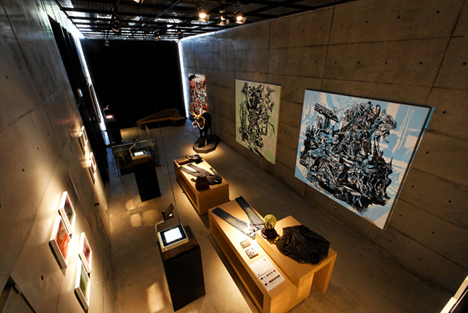 Diesel Denim Gallery in Tokyo, Aoyama mixes avant-garde art with a selection of premium Diesel clothes. “Instead of going to sign a deal with a famous artist [...] we think that if we start from scratch and build a relationship with new upcoming talent, we can gain status.” (Japan Times, August 23rd, 2007, Staying casual in Minami-Aoyama) Other fashion luxury brands to co-opt the art world include Paul Smith (http://www.paulsmith.co.uk/personal/space-gallery/, accessed 20.01.2008. The shop is spread over 4 floors with a gallery set on the 4th Floor. In the ‘Space’ Gallery, a varied line up of British and European artist, photographers, and product designers are exhibited. See SuperFuture Online, http://www.superfuture.com/city/reviews/review.cfm?ID=309, accessed 20.01.2008), Gucci and Louis Vuitton, with its famous “The Culture of Branding” show in collaboration with the artist Murakami Takashi. Currid (2007) considers these cooperations built on the fact: “[...] underneath the glamour and frivolity of art and culture are real social and economic mechanisms [...]” (Currid 2007: xi)
Other concepts include to move a whole brand upscale, as seen in the case of Isetan, a department store targeting male customers. By lining up high-end items on the top-floor of their store in Shinjuku as though they were museum pieces, they want to attract customers. The idea proved extremely successful by adjusting the product portfolio to the middle-aged male customer who seeks to make a fashion statement (The Nikkei Weekly, November 5th, 2007, Retailer finds way into men's wallets: 20). Ace Gene started in February 2007 to polish its luxury image and achieved a big increase in its profit margins by equally moving upscale (The Nikkei Weekly, September 3rd, 2007, Sales gains of 10% are for sissies, p. 21. After opening its Hibiya flagship store, Ace Gene discontinued internet sales and stopped marketing through general merchandise stores, increasing the luxury image. Prices were raised by 25%. Domestic sales from February to June were 80% higher). Baccarat Pacific K.K., a subsidiary of a major crystal ware maker from France, has been showing rapid growth after changing its brand strategy from a producer of dish wares to a luxury brand. The brand created an environment which made the buying process more of a lifestyle experience (The branches in Marunochi and Roppongi are examples where this has been implemented. See The Nikkei Weekly, Baccarat Pacific K.K., March 26th, 2007, p. 20. Baccarat experienced a 300% sales gain from 1996 to 2006. The new strategy tried to nurture Baccarat as a luxury brand that serves many aspects of the customers' lifestyles. Some stores are now equipped with trendy bars where visitors have the opportunity to enjoy drinking with the glasses they choose. The bartenders are trained with product specific information and in the history of the brand).
The creation of flagship stores of European luxury brands started in 2001 with the $138-million La Maison Hermes and since then other luxury brands have followed the trend of engaging top architects to create spectacular shopping palaces. “Japanese refinement of the retail experience plus a general lack of attachment to old structures drives a style of shop development that has produced some of the new architectural temples of the century.” (Superfuture superguide Tokyo, online, http://supertalk.superfuture.com/supershop/superguides/superguides-tokyo.php, accessed 20.10.2008) The latest overseas brands to appear in the upscale shopping district of Ginza were Bulgari and Armani, both in November 2007. Having a presence in Tokyo is considered an important part in the image-creation and also a jumping point to other Asian luxury markets (Japan Times, October 15th, 2007, Upscale saloons pamper rich: 52).
Luxury brand online stores have created services for customers that are beyond the scope of the average shopping site on the internet. It becomes more important for luxury brands and fashion houses to improve their presence known online, leading to the emergence of a new generation of virtual Japanese shopping towns (Examples are megaseek for men/mfm, select square, zozoresort, and 109 men's net, see “Virtual Luxury”, Anterior Insight 2008. Fendi launched on September 2006 a 15 seconds Video Ad exclusively on style.com, making a step away from print advertising on billboards and in magazines. Virtual shopping itself to become the new retail medium for many high fashion and luxury brands).
Luxury companies should devise creative ways in which they can take shopping out of the usual context, giving consumers the opportunity to discover new things and experiences. In this way luxury brands are connected with emotional values of diverse consumer lifestyles by connecting with the specific 'triggers' that make a consumer's brand experience enriching and unique (The Financial Times, September 9th, 2007, What luxury means now; “Convenience Luxury”, Anterior Insight 2008; Danziger 2005: 30; Graham and Matthews 2004).
Friday, June 13, 2008
Postmodernism in Japan—the development of a mature consumer behavior
The high-growth phase in Japan influenced all aspects of private life. The baby boomers, as Higashi (2004) points out, were the icons of their time. Security and a sense of belonging to a large corporation, the “typical” middle-class lifestyle, was idealized as the norm for ordinary lives in the second half of the 20th century. The job was the primary identity for the man and marriage, family and raising the children the primary role attributed to the woman (The model of the company and family as primary identity is not uniquely Japanese. See for example Helgesen, Sally, 1998: Everyday Revolutionaries: Working Women and the Transformation of American Life, Doubleday, New York 1998, describing the typical model of middle-class life as a normal condition of life in a post-modern industrial society. Also refer to Whyte, William H., 1961: The Organization Man, Penguin Books, London 1961). Not the ie-system (an extended patriarchal household) but the nuclear family became the new model, which is now challenged by a growing number of singles as late marriages increase and birth rates are declining (McCreery 2000: 247: “As in other parts of the world, ideals that took root in the 1950s have been radically challenged by the impact of consumerism on the home as well as the market place. [...] In Japan, as elsewhere, roles of husband and wife associated with the new-model nuclear family popularized in the fifties were the products of modern industrial economies shaped to meet the needs of mass production.”)
McCreery (2000) sees parallels to other capitalist societies and thinks that the key to understanding the transition of Japan from a modern society into a post-modern one lies in seeing that consumer demand led directly to
“[...] habits and values at odds with the disciplines that industry demands of its workers. Self-sacrifice and willing obedience validated by a sense of belonging have been challenged by advertising images offering instant gratification and encouraging consumers to seek satisfaction of their own personal uniquely desires. [...] The idea, that if happiness can't be bought, the next best thing is readily available to those who can pay the price has eroded the core values of modern, industrial middle class life. Delayed gratification, and strong group loyalties no longer seem both desirable and inevitable. [...] “The new breed, as a smaller generation in a nation whose wealth and economic power seemed destined to number one, could afford to be self-indulgent [..] their designer hand bags and something crystal lifestyles were said to be post-modern.” (McCreery 2000: 248)
The new breed was free to demand more of the nice side of life and even question the lifetime employment system in favor for job hopping. The different mind-set was caused by more disposable income and a higher demand in the labor market. The collapse of the bubble crushed this lifestyle and left them frustrated as they began to feel the pressure from the new economic conditions. Life became increasingly centered solely on consumption and marriage and children ceased to be the only socially acceptable roles. Single attitudes spread even to those who did marry, leading to a declining birthrate. The term “something crystal” is referring to the book by Yasuo Tanaka, who won the Bungei Award for his debut novel ‘’Nantonaku Kurisutaru,’’ (sort of crystal; the original translation of the book title in English is “Something Crystal”) in 1980. (Tanaka, Yasuo「田中康夫」(1981): Something Crystal「なんとなく、クリスタル」, shinchousha「新潮社」, Tokyo 1985). The main character Uri belongs to the young generation of Japan, exhibiting a totally westernized lifestyle: she likes western food, listens to western music and prefers to dress in western clothes. The special feature about the novel are the approximately 400 footnotes that describe in detail and with a sense of irony the brands, restaurants and shops encountered in the story.
During the bubble economy, many Japanese people, based on the prevailing view that consumption was a virtue, were embracing the mass-production, mass consumption society that was the dominant lifestyle then (Danke 2005: 8). Sugimoto (2003) sees the start of diversification in the 1980s. Previously manufacturers sold models standardized for mass consumption, successfully promoting them through sales campaigns and advertising, but this strategy became ineffective as consumers started to demand products that appeal to them on a more personal level and became more unpredictable, selective and inquisitive, not like the uniform mass consumers of the pre-bubble times (Sugimoto 2003: 8-9).
Fujita (1984) suggests the emergence of shoushu (小衆), individualized, divided and small-unit masses set into contrast with taishuu (大衆), undifferentiated, uniform and large-scale masses (See Fujioka, Wakao「藤岡和賀尾夫」(1984): Farewell to the masses. How to read the age of sensibility「さよなら、大衆。感性時代をどう読むか」, PHP Reserach Center「PHP研究所」, Tokyo 1984). The advertising company Hakuhodo (1985) sees the term bunshuu (分衆) or segmented masses, as better suited to describe this new consumer behavior than the conventional image of homogenous masses (See Hakuhodo (1985): The birth of the segmented masses「「分衆」の誕生」, Hakuhodo Insititute for Live and Living「博報堂生活総合研究所」, Tokyo 1985).
As society in Japan changed, it became increasingly difficult to imagine the features of consumers. Seeing the Japanese as stereotypes of rational-choice economic animals that respond to market dictates in a similar way like their European and American counterparts is seen by McCreery (2000) as simplifying and missing the point. He instead proposes a model of the Japanese as being neither too “western” nor too exceptional (See McCreery 2000: 258. He describes a model with three main characteristics: ( 1 ) Japan is a modern nation affected by the same global trends, opportunities and problems as other nations. ( 2 ) Japanese responses are constrained by institutional and material frameworks specific to Japan, which are not uniquely Japanese, if only in their concentration on one geographical place, and ( 3 ) there are specifically Japanese ways of perceiving what has been going on in Japan, which are influenced by tradition and its transformations). Like other nations he sees Japan as a post-modern economy in respect to changes that have been made in the sources of economic value, from hardware to software, from products to services, from things to information, and from substance to style. Demographics alone have ceased to be a strong predictor of individual lifestyles (McCreery 2000: 259).
McCreery (2000) sees parallels to other capitalist societies and thinks that the key to understanding the transition of Japan from a modern society into a post-modern one lies in seeing that consumer demand led directly to
“[...] habits and values at odds with the disciplines that industry demands of its workers. Self-sacrifice and willing obedience validated by a sense of belonging have been challenged by advertising images offering instant gratification and encouraging consumers to seek satisfaction of their own personal uniquely desires. [...] The idea, that if happiness can't be bought, the next best thing is readily available to those who can pay the price has eroded the core values of modern, industrial middle class life. Delayed gratification, and strong group loyalties no longer seem both desirable and inevitable. [...] “The new breed, as a smaller generation in a nation whose wealth and economic power seemed destined to number one, could afford to be self-indulgent [..] their designer hand bags and something crystal lifestyles were said to be post-modern.” (McCreery 2000: 248)
The new breed was free to demand more of the nice side of life and even question the lifetime employment system in favor for job hopping. The different mind-set was caused by more disposable income and a higher demand in the labor market. The collapse of the bubble crushed this lifestyle and left them frustrated as they began to feel the pressure from the new economic conditions. Life became increasingly centered solely on consumption and marriage and children ceased to be the only socially acceptable roles. Single attitudes spread even to those who did marry, leading to a declining birthrate. The term “something crystal” is referring to the book by Yasuo Tanaka, who won the Bungei Award for his debut novel ‘’Nantonaku Kurisutaru,’’ (sort of crystal; the original translation of the book title in English is “Something Crystal”) in 1980. (Tanaka, Yasuo「田中康夫」(1981): Something Crystal「なんとなく、クリスタル」, shinchousha「新潮社」, Tokyo 1985). The main character Uri belongs to the young generation of Japan, exhibiting a totally westernized lifestyle: she likes western food, listens to western music and prefers to dress in western clothes. The special feature about the novel are the approximately 400 footnotes that describe in detail and with a sense of irony the brands, restaurants and shops encountered in the story.
During the bubble economy, many Japanese people, based on the prevailing view that consumption was a virtue, were embracing the mass-production, mass consumption society that was the dominant lifestyle then (Danke 2005: 8). Sugimoto (2003) sees the start of diversification in the 1980s. Previously manufacturers sold models standardized for mass consumption, successfully promoting them through sales campaigns and advertising, but this strategy became ineffective as consumers started to demand products that appeal to them on a more personal level and became more unpredictable, selective and inquisitive, not like the uniform mass consumers of the pre-bubble times (Sugimoto 2003: 8-9).
Fujita (1984) suggests the emergence of shoushu (小衆), individualized, divided and small-unit masses set into contrast with taishuu (大衆), undifferentiated, uniform and large-scale masses (See Fujioka, Wakao「藤岡和賀尾夫」(1984): Farewell to the masses. How to read the age of sensibility「さよなら、大衆。感性時代をどう読むか」, PHP Reserach Center「PHP研究所」, Tokyo 1984). The advertising company Hakuhodo (1985) sees the term bunshuu (分衆) or segmented masses, as better suited to describe this new consumer behavior than the conventional image of homogenous masses (See Hakuhodo (1985): The birth of the segmented masses「「分衆」の誕生」, Hakuhodo Insititute for Live and Living「博報堂生活総合研究所」, Tokyo 1985).
As society in Japan changed, it became increasingly difficult to imagine the features of consumers. Seeing the Japanese as stereotypes of rational-choice economic animals that respond to market dictates in a similar way like their European and American counterparts is seen by McCreery (2000) as simplifying and missing the point. He instead proposes a model of the Japanese as being neither too “western” nor too exceptional (See McCreery 2000: 258. He describes a model with three main characteristics: ( 1 ) Japan is a modern nation affected by the same global trends, opportunities and problems as other nations. ( 2 ) Japanese responses are constrained by institutional and material frameworks specific to Japan, which are not uniquely Japanese, if only in their concentration on one geographical place, and ( 3 ) there are specifically Japanese ways of perceiving what has been going on in Japan, which are influenced by tradition and its transformations). Like other nations he sees Japan as a post-modern economy in respect to changes that have been made in the sources of economic value, from hardware to software, from products to services, from things to information, and from substance to style. Demographics alone have ceased to be a strong predictor of individual lifestyles (McCreery 2000: 259).
Monday, April 7, 2008
HNWIs in Japan
The Analysis is dominated by populist depictions of social strata and groups that demand a lot of media attention. But to understand the changes, we have to look into a detailed consumer group analysis as well as major trends that are predominantly not covered in western press releases.
While the Japanese themselves are trying to make sense of the new business environment, one development seems to be clear, that the market has changed, that those who dont seem to change fast enough and try to adopt seem to get into difficulties or just face the threat of suffering major losses in the future. Not only the market has changed, other markets appear, where the money lies, where opportunities are waiting to be discovered not only by Japanese companies but also by foreign ones.
The buzz-words that are most common in marketing literature include the New Luxury movement and a trend toward lifestyle consumption, a global trend that gained wide coverage by books like trading-up and mass affluence as well as marketing groups like the Boston Consulting Group and otrher Luxury market research groups. While the trend in America may have slightly different underpinnings, the basic structure of the amassed welath is the same in Japan, with baby boomers facing retirement and young business people changing the face of being rich and the attitues toward luxury.
Limiting HNWIs in Japan to one segment is not explaining the complexity of the issue. A company has a product portfolio that does not make profit by catering solely to HNWIs. Limiting services to a part of the rich is a strategy, but for companies who offer consulting to other companies catering to the rich. A company catering to the premium market does not have the “luxury” of simplification.
While the Japanese themselves are trying to make sense of the new business environment, one development seems to be clear, that the market has changed, that those who dont seem to change fast enough and try to adopt seem to get into difficulties or just face the threat of suffering major losses in the future. Not only the market has changed, other markets appear, where the money lies, where opportunities are waiting to be discovered not only by Japanese companies but also by foreign ones.
The buzz-words that are most common in marketing literature include the New Luxury movement and a trend toward lifestyle consumption, a global trend that gained wide coverage by books like trading-up and mass affluence as well as marketing groups like the Boston Consulting Group and otrher Luxury market research groups. While the trend in America may have slightly different underpinnings, the basic structure of the amassed welath is the same in Japan, with baby boomers facing retirement and young business people changing the face of being rich and the attitues toward luxury.
Limiting HNWIs in Japan to one segment is not explaining the complexity of the issue. A company has a product portfolio that does not make profit by catering solely to HNWIs. Limiting services to a part of the rich is a strategy, but for companies who offer consulting to other companies catering to the rich. A company catering to the premium market does not have the “luxury” of simplification.
Basic marketing considerations
Rich marketing is basically about how do I get access to the customers with a higher media exclusivity, how do I influence opinion leaders (to start BUZZ) and how do I create a two-way communication system (a meaningful, long-term relationship) with my customers. Further to be considered are the influence of the HNWI market on the normal market and how to change the product segmentation and customer segmentation while at the same time staying true to the brand values.
Creating an effective strategy might include the use of different channels. In Japan, the business models of the companies who do cater to the needs of companies doing business with the rich, do not necessarily exclude each other. All of the presented solutions offer a way to gain access to HNWI customers or mass affluents, but do so using different channels and reaching different customers segments. Interviews conducted with each if the companies basically revealed one common feature upon which all of them could agree, there is still huge potential in the market for HNWIs in Japan which could be tapped by both foreign luxury companies as well as by Japanese corporations. Using the right channels might mean the difference between sucess and failure or missing the chance to tap new customer segments that were not targeted before.
In Japan there are further considerations to go with this, for a foreign company. How do I have to adjust my product considering packaging and promotion in Japan (higher standards, different values), also information about the core competitors strategies and their access to FYS databases has to be considered (which channels do they use, what events, buzz strategies, if at all, do they employ). The access to opinion leaders in Japan is an asset that builds up over time and therefore is something that you cant access without help. Over time, a meaningful relationship with your customers and a future oriented marketing method means to build up not only a functioning database of customers and would-be customers but also a network of opinion leaders, artists, creative people and instruments (environments) where you can interact with them (like the Art Gaia Club), a marketing environment or an environmental marketing tool. CSR plays an extensive role in this as people tend to freqeunt such club-marketing clubs more frequently when the reason to be there is personal and not connected to the purchasing of any products (clear pull-approach).
Its a battle about getting access and providing the best tools to gain it. HNWIs are not reached directly. Two things are important, getting access and executing this in a creative way. Communication instead of plain product marketing. For big players in the field the question is with which companies to form partnerships to get benefits and access to HNIWs, and also collaboration advantages. Smaller companies have to deal with issues like product placement and adjustment, bigger corporations with issues as how marketing is executed to transport the brand image and its values. Indirect ways are important, pull marketing strategies.
The potential is high and the money not yet spend. To become part of peoples lives, is not only meaningful but essential. Especially in an environment like Japan where social networking is of such a big relevance, contacts on the Japanese site are essential, so foreign companies need to establish a network of SNS, connections, feedback (permanent), and fresh imputs. Working together with educational institutions can be as important a trend sensor as the usual marketing instruments.
One important last thing to consider-the language barrier leads to interesting constellations. Do not think that information is something readily available in Japan. Especially in the premium sector, where there are many corporations in the field that have to execute communication back to their home bases, information is often secular and not transferred immediately or perfectly to other sources. On the other side, working with smaller corporations can be of an advantage considering the transfer of information, the permanent information flow within the big giants like Dentsu or Hakuhodo. Premium customers are competing against marketing and advertising budgets of about 5-10 times their size and are allocated ressources accordingly. Using innovative techniques can be a way out of this dilemma.
Sources are predominantly not translated into English and the other way around. The education system in Japan leads to this situation. (see McVeigh 2003/2005, Matthews 2004, McCreery 2000 and Sugitomo 2003). Companies need a good strategy and help to overcome these marketing difficulties.
Basically, the difficulties in the Japanese market are not so difficult to overcome. The trick is to overcome them by the right use of market intelligence and professional local help. To know which players are really performing the desired role in a professional way is also essential (the Japanese market is not more closed, only in the labor market. For a disadvantage to be of any meaning it has to be discriminatory to the foreigners and not be present in the European markets for the Japanese).
Finally, the change in the market and a change in which manner marketing is perceived and the relationship with the customer has changed in the information age, what has to be changed by companies universally, not only in the HNWI business, is a shift from a one-way relationship of a producer of goods and the consumer, towards a two-way communication, a meaningful relationship. Luxury producers and companies in the premium segment will find out that relationships with rich people and their best customers in Japan are by the most part one-way relationships with no communication, where products are consumed for the perceived brand value, the image and prestige they confer in a world where not only status symbols but also symbols that show the belonging to a certain social strata or group are consumed because of an image that is generated among the consumers themselves, without either party able to influence this perception on a direct communicative way. Creating communication channels, establishing blogs and using different channels for advertising and buzz-marketing is something that has to be done in nearly all segments, not only in the high premium segment. The difference is the measures required for accessing the customers with a higher income bracket or higher lifetime value. They demand more and are in many ways immune to normal marketing channels. So the changing environment in the information age as well as the changing consumer bahviour have created a double challenge for luxury companies and companies in the premium segment. First the adjustment towards communicative tools and channels and the the realization that these channels are different in the premium market, more exclusive and sometimes blocked for direct access.
In Japan then, the realization has to be, on top of that, that some of those access points are simply blocked from foreigners. This might be more true in some segments than in others but the general trend is that the higher the level in which to market operates, the more sophisticated the approach has to be and the more market intelligence is required. Market intelligence that can most of the time only be provided by companies long enough in the field to make the necessary connections and to be in acceptable social positions. Enlisting those companies help and kowing how to evaluate their services, by doing own research in social sciences in Japan, can mean the difference between successfully adapting to the changed paramenters or to loose market share to competitors that transformed this intelligence into appropriate measures.
Creating an effective strategy might include the use of different channels. In Japan, the business models of the companies who do cater to the needs of companies doing business with the rich, do not necessarily exclude each other. All of the presented solutions offer a way to gain access to HNWI customers or mass affluents, but do so using different channels and reaching different customers segments. Interviews conducted with each if the companies basically revealed one common feature upon which all of them could agree, there is still huge potential in the market for HNWIs in Japan which could be tapped by both foreign luxury companies as well as by Japanese corporations. Using the right channels might mean the difference between sucess and failure or missing the chance to tap new customer segments that were not targeted before.
In Japan there are further considerations to go with this, for a foreign company. How do I have to adjust my product considering packaging and promotion in Japan (higher standards, different values), also information about the core competitors strategies and their access to FYS databases has to be considered (which channels do they use, what events, buzz strategies, if at all, do they employ). The access to opinion leaders in Japan is an asset that builds up over time and therefore is something that you cant access without help. Over time, a meaningful relationship with your customers and a future oriented marketing method means to build up not only a functioning database of customers and would-be customers but also a network of opinion leaders, artists, creative people and instruments (environments) where you can interact with them (like the Art Gaia Club), a marketing environment or an environmental marketing tool. CSR plays an extensive role in this as people tend to freqeunt such club-marketing clubs more frequently when the reason to be there is personal and not connected to the purchasing of any products (clear pull-approach).
Its a battle about getting access and providing the best tools to gain it. HNWIs are not reached directly. Two things are important, getting access and executing this in a creative way. Communication instead of plain product marketing. For big players in the field the question is with which companies to form partnerships to get benefits and access to HNIWs, and also collaboration advantages. Smaller companies have to deal with issues like product placement and adjustment, bigger corporations with issues as how marketing is executed to transport the brand image and its values. Indirect ways are important, pull marketing strategies.
The potential is high and the money not yet spend. To become part of peoples lives, is not only meaningful but essential. Especially in an environment like Japan where social networking is of such a big relevance, contacts on the Japanese site are essential, so foreign companies need to establish a network of SNS, connections, feedback (permanent), and fresh imputs. Working together with educational institutions can be as important a trend sensor as the usual marketing instruments.
One important last thing to consider-the language barrier leads to interesting constellations. Do not think that information is something readily available in Japan. Especially in the premium sector, where there are many corporations in the field that have to execute communication back to their home bases, information is often secular and not transferred immediately or perfectly to other sources. On the other side, working with smaller corporations can be of an advantage considering the transfer of information, the permanent information flow within the big giants like Dentsu or Hakuhodo. Premium customers are competing against marketing and advertising budgets of about 5-10 times their size and are allocated ressources accordingly. Using innovative techniques can be a way out of this dilemma.
Sources are predominantly not translated into English and the other way around. The education system in Japan leads to this situation. (see McVeigh 2003/2005, Matthews 2004, McCreery 2000 and Sugitomo 2003). Companies need a good strategy and help to overcome these marketing difficulties.
Basically, the difficulties in the Japanese market are not so difficult to overcome. The trick is to overcome them by the right use of market intelligence and professional local help. To know which players are really performing the desired role in a professional way is also essential (the Japanese market is not more closed, only in the labor market. For a disadvantage to be of any meaning it has to be discriminatory to the foreigners and not be present in the European markets for the Japanese).
Finally, the change in the market and a change in which manner marketing is perceived and the relationship with the customer has changed in the information age, what has to be changed by companies universally, not only in the HNWI business, is a shift from a one-way relationship of a producer of goods and the consumer, towards a two-way communication, a meaningful relationship. Luxury producers and companies in the premium segment will find out that relationships with rich people and their best customers in Japan are by the most part one-way relationships with no communication, where products are consumed for the perceived brand value, the image and prestige they confer in a world where not only status symbols but also symbols that show the belonging to a certain social strata or group are consumed because of an image that is generated among the consumers themselves, without either party able to influence this perception on a direct communicative way. Creating communication channels, establishing blogs and using different channels for advertising and buzz-marketing is something that has to be done in nearly all segments, not only in the high premium segment. The difference is the measures required for accessing the customers with a higher income bracket or higher lifetime value. They demand more and are in many ways immune to normal marketing channels. So the changing environment in the information age as well as the changing consumer bahviour have created a double challenge for luxury companies and companies in the premium segment. First the adjustment towards communicative tools and channels and the the realization that these channels are different in the premium market, more exclusive and sometimes blocked for direct access.
In Japan then, the realization has to be, on top of that, that some of those access points are simply blocked from foreigners. This might be more true in some segments than in others but the general trend is that the higher the level in which to market operates, the more sophisticated the approach has to be and the more market intelligence is required. Market intelligence that can most of the time only be provided by companies long enough in the field to make the necessary connections and to be in acceptable social positions. Enlisting those companies help and kowing how to evaluate their services, by doing own research in social sciences in Japan, can mean the difference between successfully adapting to the changed paramenters or to loose market share to competitors that transformed this intelligence into appropriate measures.
Subscribe to:
Posts (Atom)