
Friday, August 8, 2008
5_References
Abraham-Holdings 「アブラハム・グループ・ホールディングス株式会社」(2008): Corporate web site, online, last accessed 12.05.2008, <www.abraham-holdings.com>, <http://abraham-marketing.com>.
———— .(2007): Company profile, can be accessed upon request under 〒 100-0004, Tokyo, Chiyouda-Ku, Outemachi 1-5-1, Outemachi First Square East Tower-4F.
Allen, James; Rigby, Darrell (2005): 'The Consumer of 2020', in: Business and Management, Bingley: Emerald Group Publishing.
Anterior Insight (2008): Luxury Future's Report, online, accessed 26.10.2007, .
Arndt, Johan (1968): 'Selective processes in word of mouth', in: Journal of Advertising Research, 8, pp. 19-22.
Art Gaia 「株式会社アートガイア」(2007a): Company web site, online, last accessed 02.03.2007, <www.artgaia.jp>.
———— .(2007b): Company profile, can be accessed upon request under 〒141-0021, Tokyo, Shinagawa-Ku, Kamiousaki 3-1-4, RE-KNOW Meguro, .
Babin, Barry J.; Babnin, Laurie (2001): 'Seeking something different? A model of schema typicality, consumer affect, purchase intentions and perceived shopping value', in: Journal of Business Research, 54(2), pp. 89-96.
Babin, Barry J.; Lee, Yong-Ki; Kim, Eun-Ju; Griffin, Mitch (2005): 'Modeling consumer satisfaction and word-of-mouth: restaurant patronage in Korea', in: Journal of Services Marketing, 19(3), pp. 213-222.
Bedbury, Scott (2002): Brand world: 8 principles for achieving brand leadership in the 21st century, New York: Viking.
Brooks, David (2000): Bobos In Paradise: The New Upper Class and How They Got There, Touchstone, New York 2000.
Brown, Jacquelin Johnson; Reingen, Peter H. (1987): 'Social ties and word of mouth referral behavior', in: Journal of Consumer Research, 14(1), pp. 350-362.
Buchanan Patrick (2001): The death of the West: How dying populations and immigrant invasions imperil our country and civilization (1st ed.), New York: Thomas Dunne Books.
Callahan, Sean;Ries, AL (2002): Proclaiming the fall of advertising, B2B, online, 14th October 2002, accessed 04.05.2008,
Chadha, Radha; Husband, Paul (2006): The Cult of the Luxury Brand. Inside Asia's Love Affair with Luxury, Boston: Nicholas Brealey International.
Chapelle, Tony; Trincal, Emma (2005): The Mass Affluent. In: OnWallStreet, 05/2005, New York: Source Media, pp. 40-50.
Chiba, Hitoshi (2006): The New Consumerism. In: The Japan Journal, (9), pp. 6-9.
Clegg, Alicia (2005): The Myth of Authenticity, 15th August 2005, online, accessed 19.04.2008, <http://www.brandchannel.com/features_effect.asp?pf_id=276>.
Danke, Shun (2005): The Year 2007 Problem. In: Japan-Close-Up, (4), pp. 8-21.
Danziger, Pamela N. (2005): Let Them Eat Cake: Marketing Luxury to the Masses - As Well as the Classes, New York: Kaplan Business.
Davis, William (2006): The Wad Squad. In: Director, (9), pp. 57-60.
Diamond 「週刊ダイヤモンド」(2006): The new rich. Birth of a new class 「新富裕層・新たな階層の誕生」, 18.10.2006, 94/39, special issue, Tokyo: daiyamondosha「ダイヤモンド社」, pp. 28-61, 116-131.
Dunn, Michael; Davis, Scott (2004): 'Creating the brand-driven business: it’s the CEO who must lead the way', in: Handbook of Business Strategy, Vol. 5(1), pp. 243-248.
E-Marketing 「株式会社イー・マーケティング」(2007): Corporate web site, online, accessed 02.03.2007, .
Forbes (2005): 7 Trends in Luxury, online, accessed 20.04.2008, .
Frank, Robert (2000): Luxury Fever, Princeton: Princeton University Press.
Goddkind (2006): 'Buzzworthy PR', in: Kirby, J. and Marsden, P. (eds.): Connected Marketing, Oxford: Butterworth-Heinemann, pp. 71-86.
Graham, Patricia; Matthews, Marcus (2004): The changing face of luxury, Knowledge Networks, online, accessed 12.01.2008, <www.knowledgenetworks.com/know/2004/spring/1-1_graham.html>.
Granovetter, Mark S. (1973): 'The strength of weak ties', in: American Journal of Sociology, 78(6): pp. 1360-1380.
Hakuhodo (2004): Hope Report. Baby Boomer Research 1: Preliminary Report on Survey of Baby Boomer Perceptions of Retirement 「HOPEレポートXV 団塊リサーチ(1)「団塊夫婦の定年意識」に関する調査速報」, 21.09.2004, online, accessed 22.01.2007, <www.hakuhodo.co.jp/news/pdf/20040908.pdf>.
———— . (2006a): HOPE survey 2006. Japanese Baby Boomers take stock of 60 years of life「HOPEレポートXXI・HOPEサーベイ2006 「団塊世代 人生60年の棚卸し」, 24.11.2006, online, accessed 18.01.2007, <www.hakuhodo.co.jp/news/pdf/20061124.pdf>.
———— . (2006b): The Debut of the Seikatsusha 2.0 「生活定点調査2006速報:生活者2.0」, 24.07. 2006, online, accessed 24.02.2007, <www.hakuhodo.co.jp/pdf/2006/20060724.pdf>.
Hakuhodo Study Group on the Rich 「博報堂お金持ち勉強会」(2007): “The Black Rich”—What is that? 「黒リッチってなんですか?」, Tokyo: Shueisha 「集英社」.
Hartman, Cathy L.; Kiecker, Pamela L. (1991): 'Marketplace influencers at the point of purchase: the role of purchase pals in consumer decision making', in: Gilly, Mary and Dwyer, Robert (eds.): AMA Educators' Proceedings, vol. 2, American Marketing Association, pp. 461-469.
Hashimoto, Kenji 「橋本健二」(2006): Class society: The question of inequality in contemporary Japan「階級社会・現代日本の格差を問う」, Tokyo: Koudansha 「講談社」.
Hayashi, Shingo 「林信号」(2005): The silent new class society. Inequality in an „anglicized” Japan 「しのびよるネオ階級社会・’’イギリス化’’する日本の格差」, Tokyo: Heibonsha「平凡社」.
Higushi, Yoshio et al. 「樋口美雄」(2004): The retirement age of the dankai-generation and the Japanese economy 「団塊世代の定年と日本経済」, Tokyo: Nihonhyouronsha 「日本評論社」.
Hirano, Koji; Miles, Socha (2006): 'Japan's New Consumer: Less Mania for Brands as Individuality Rules', in: Women's Wear Daily, 11.12.2006, 192(122), pp. 1-13.
Howard, Debbie (2006): Japan's Changing Consumer, lecture held in Ootemachi, Tokyo, 15.11.2006.
Hugstad, Paul; Taylor James W.; Bruce, Grady D. (1987): 'The effect of social class and perceived risk on consumer information search', in: Journal of Service Marketing, 1(1): pp. 47-52.
Hui, Carol (2006): 'The Winners and the Losers', in: Japan-Close-Up, (8), p. 42.
Ishiwata, Yuko (2006): Trends among Japanese Customers and Promising Targets, Center For Consumer Research, Dentsu Inc., online, accessed 27.01.2007, .
Japan Close-Up (2006): 'A Shop that thinks about Customers', in: Japan-Close-Up, (8), p .11.
Katz, Elihu; Lazarsfeld, Paul F. (1955): Personal influence: The part played by people in the flow of mass communication, Glencoe: Free Press.
Kitashiro, Kakutarou et al. 「北城恪太郎」(2006): The 60th year of the dankai-generation - how will they live? 「団塊世代60年ーどう生きてきたかー」, seisanseishuppan 「生産性出版」, Tokyo 2006.
Klosterman, Chuck (18.06.2006): The DJ Auteur, New York Times Magazine.
Kotler, Philip; Lee, Nacy (2004): Corporate Social Responsibility: Doing the Most Good for Your Company and Your Cause, Hoboken,NJ: John Wiley & Sons.
Kotler, Philip; Pfoertsch, Waldenmar (2006): B2B, Brand Management, Berlin, New York: Springer.
KT Marketing 「KTマケティング株式会社」 (2008): Corporate web site, online, accessed 08.05.2008, <www.ktmktg.co.jp>.
Kumar, V.; Petersen, Andrew; Leone, Robert P. (2008): How Valuable Is Word of Mouth?, Harvard Business Review R0710J, online, accessed 19.04.2008, .
Laczniak, Russell N.; DeCarlo, Thomas E.; Ramaswami, Sridhar N. (2001): 'Consumers' responses to negative word of mouth communication: an attribution theory perspective', in: Journal of Consumer Psychology, 11(1), pp. 57-73.
Lazarsfeld, P. (1944): The People's Choice: How the voter makes up his mind in a presidential campaign, New York: Duell Sloan and Pearce.
McCreery, John L. (2000): Japanese Consumer Behavior, Richmond: Curzon Press.
METI, [Ministry of Economy, Trade and Industry] 「経済産業省」(2005): Strategies for the creation new industries 「新産業創造戦略」.
Merrill Lynch; Capgemini (2006): World Wealth Report: Regional Facts, online, accessed 12.02.2007, <www.ml.com/media/67217.pdf>.
Miyamoto, Hiroyuki; Mutoh, Masahiro; Ogitomo, Yoko (2006): Marketing for Newly Wealthy Clients: Targeting the Mass Affluent, NRI Papers no. 99, 01.01.2006, online, accessed 27.02.2007, <http://www.nri.co.jp/english/opinion/papers/2006/pdf/np200699.pdf>.
Miyamoto, Hiroyuki; Obinata, Takenobu 「宮本弘之・尾日向竹信」(2005): Study of the new-generation rich. Strategies for conquering the new rich 「新世代富裕層の研究ーネオ・リッチ攻略への戦略」, Nomura Research Institute 「野村総合研究所」, Tokyo: Toyokeizaishinhousha 「東洋経済新報社」.
Miyamoto, Matao; Abe, Takeshi 「宮本又郎・阿部武司」(1995): 'The wealthy elite and the social structure in Meiji Japan' 「明治の資産家と会社制度」, in: Iwanami Japanese Management History 「岩波に本経営史」, vol. 2, Tokyo: Iwanamishoten 「岩波書店」.
Murray, Keith B. (1991): 'A test of services marketing theory: consumer acquisition activities', in: Journal of Marketing, 55(1), pp. 10-25.
Myers, James H.; Robertson, Thomas S. (1972): 'Dimensions of opinion leadership', in: Journal of Marketing Research, 9(1), pp. 41-46.
Naikakuhu [Cabinet Office of the Japanese Government] 「内閣府」(2005): Public Opinion Poll on Consumption and Savings Be havior and National Burden.「消費・貯蓄行動と国民負担に関する意識調査」.
Nakaoka, Shunsuke (2006): 'The Making of Modern Riches: The Social Origins of the Economic Elite in the Early 20th Century', in: Social Science Japan Journal, 9(2), pp. 221-241.
Nihonsôgôkenkyûsho 「日本総合研究所」(2006): The retirement of the „dankai-generation” opens up business opportunities in a changed economy 「「団塊」退職jで変わる経済伸びるビジネス」, Tokyo: Nihonsôgôkenkyûsho 「日本総合研究所」.
Nikkei Konwakai 「日経懇話会」(2005): The year 2005, private consumption has reached a turning point 「2005年、転換期を迎えた個人消費」, nikkei konwakai 「日経懇話会」, Nihon Keizai Shinbun, Inc., online, accessed 09.02.2007, .
Nitta, Hiroyuki (2006): Capitalizing on the Retirement of the First Baby Boomers. In: Japan Economic Report, 04-05/2006, JETRO, online, accessed 10.01.2007, .
Nomura Research Institute (2006): It Road Map” of Web 2.0 Technology Up Until 2011, 10th November 2006, online, accessed 20.04.2008, .
Nunes, Paul; Johnson, Brian A.; Breen, M. Timothy S. (2004): Selling to the Moneyed Masses, Harvard Business Review article, product no. R0407G, online, accessed 20.02.2007, .
Ota, Hiroko (2006): 'The End of the Lost Decade', In: Asia-Pacific Perspectives: Japan+, 02/2004, 3/10, pp. 6-21.
Paul M. Herr, Frank R. Kardes and John Kim (1991): 'Effects of Word-of-Mouth and Product-Attribute Information on Persuasion: An Accessibility-Diagnosticity Perspective', in: The Journal of Consumer Research, Vol. 17(4), pp. 454-462.
Reischenauer, Edwin O. (1983): 'Not Westernization but Modernization', in: Wray, Harry and Conroy, Hilary (eds.): Japan Examined: Perspectives on Modern Japanese History, Honolulu: University of Hawaii Press, pp. 369-375.
Reynolds, Fred D.; Darden, William R. (1971): 'Mutually adaptive effects of interpersonal communication', Journal of Marketing Research, 8(4), pp. 454-462.
Richins, Marsha L.; Root-Shaffer, Teri (1988): 'The role of involvement and opinion leadership in consumer word of mouth: an implicit model made explicit', in: Advances in Consumer Research, 15(1): pp. 32-36.
Rogers, Everett (1995): The diffusion of innovation, (4th Edition), New York: Free Press.
Scott, Allen J. (2000): The Cultural Economy of Cities: Essays on the geography of image-producing industries, London, Thousand Oaks, Calif.: Sage Publications.
———— . (2008): Social economy of the metropolis: Cognitive-cultural capitalism and the global resurgence of cities, Oxford, New York: Oxford University Press.
Shiozaki, Junichi; Nitto, Hiroyuki; Kawadu, Nori 「塩崎潤一・日戸浩之・川津のり」(2005): The Third Consumption Style 「第三の消費スタイル。日本人独自の「利便性消費」を解くマーケティング戦略」, Nomura Research Institute 「野村総合研究所」, Tokyo: Toyokeizaishinhousha 「東洋経済新報社」.
Sigma (2005): The SIGMA Milieus®, Global Early Warning System for Product Positioning and Trends, online, accessed 19.03.2007, <www.sigma-online.com/en/Articles_and_Reports/SIGMA_Global_Milieu_Research_eng..pdf>.
Silverstein, Michael J.; Fiske, Neil (2005): Trading Up. Why Consumers Want New Luxury Goods, and how Companies Create Them, The Boston Consulting Group, New York: Portfolio.
Simmel, George (1904): 'Fashion', in: American Journal of Sociology, Vol. 62(6), pp. 541-58.
Stanley, T. J. (1993): Networking with the affluent and their advisors, Homewood Ill.: Business One Irwin.
Sugimoto, Yoshio (2003): An Introduction to Japanese Society, (2nd Edition), Cambridge, New York: Cambridge University Press.
Tachibanaki, Toshiaki (2005): Confronting Income Inequality in Japan: A Comparative Analysis of Causes, Consequences, and Reform, Cambridge, Mass.: MIT Press.
Tachibanaki, Toshiaki; Mori, Takeshi 「橘木俊詔・森剛志」(2005): Who are the rich? Study on the rich in Japan 「日本のお金持ち研究・Who are the rich?」, Tokyo: Nihonkeizaishinbunsha 「日本経済新聞社」.
Treece, J. B. (06.12.2006) Automotive News, 80(6207/00051551).
Tsuchiya, Kouji 「土屋浩二」(2007): Marketing to Affluent Customers 「富裕層マーケティング超入門」, Tokyo: Natsumesha 「ナツメ社」.
Tsuneaki, Saito; Toshihiro, Abe; Ryotaro, Sakata; Tahara, Shinji (2005): 'High Margin, High Turnover: How to sell mature products', in: Japan-Close-Up, (5), pp. 14-20.
Tsuruoka, Kengo 「鶴岡謙吾」(2007): Profiling of the new rich—targeting the cube rich 「新富裕層プロファイリング・キューブリッチを狙え!」, Tokyo: Daiyamondosha 「ダイヤモンド社」.
Udell, Jon G. (1966): 'Prepurchase behavior of buyers of small electricity appliances', in: Journal of Marketing, 30(4), pp. 50-52.
Usui, Hirofumi 「臼井宥文」(2006): The Rich in Japan. How to get through to the new upper class 「日本の富裕層ーお金持ちをお得意さまにする方法」, Tokyo: Takarajimasha 「宝島社」.


Thursday, August 7, 2008
Organizing events for luxury brands
After several meetings during my recent stay in Tokyo I realized that among all the companies that try to give solutions for HNWIs, the main question boils down to how to create and organize events that have many HNWIs and influential people on their guest list. As mentioned before (in section 3.4 of my paper) the quality of such events is directly dependent on the quality of its attending guests. How do you get them to come to your party? How do you make them feel comfortable and not part of a marketing campaign?
Several introduced companies (section 3.3) have HNWI databases. The question is now what kind of relationship does the service company have with them? It can range from anonomys address lists (credit card companies), over customer databases that give legitimization to establishing contact (AdComm), to HNWIs that are themselves customers of the service company (as in the case of the private concierge services of the Ypsilon Group). But what about personal contact? What better legitimizing value for inviting someone could there be than to know them directly, having met several times, maybe even done business with them? Following the argumentation by Stanley (1997: Networking with the affluent) direct contact and acquiring up to date information on HNWIs demands personal contact. There is simply no other way to get reliable data. Asking affluents for their incomes does not produce accurate results, doing business with them over several years does. As HNWIs tend to value their privacy and only trust sources that are not directly motivated by business alone, what is needed is an intermediary, an agent, someone who can convincingly claim independence and objectivity. Such a person (or an agency) could invite HNWIs, preselect them and act in the interest of both the affluents and the companies who want to do business with them.
I talked to a CEO yesterday who is offering exactly such a service. A customer database of 6500 HNWIs and ultra-HNWIs, all of them selected in a careful process over the course of 7 years. All of them can be contacted directly without making them feel uncomfortable. I will meet with him next week again and further check the reliability of the data given to me.
Several introduced companies (section 3.3) have HNWI databases. The question is now what kind of relationship does the service company have with them? It can range from anonomys address lists (credit card companies), over customer databases that give legitimization to establishing contact (AdComm), to HNWIs that are themselves customers of the service company (as in the case of the private concierge services of the Ypsilon Group). But what about personal contact? What better legitimizing value for inviting someone could there be than to know them directly, having met several times, maybe even done business with them? Following the argumentation by Stanley (1997: Networking with the affluent) direct contact and acquiring up to date information on HNWIs demands personal contact. There is simply no other way to get reliable data. Asking affluents for their incomes does not produce accurate results, doing business with them over several years does. As HNWIs tend to value their privacy and only trust sources that are not directly motivated by business alone, what is needed is an intermediary, an agent, someone who can convincingly claim independence and objectivity. Such a person (or an agency) could invite HNWIs, preselect them and act in the interest of both the affluents and the companies who want to do business with them.
I talked to a CEO yesterday who is offering exactly such a service. A customer database of 6500 HNWIs and ultra-HNWIs, all of them selected in a careful process over the course of 7 years. All of them can be contacted directly without making them feel uncomfortable. I will meet with him next week again and further check the reliability of the data given to me.
Wednesday, August 6, 2008
The changing meaning of luxury in Japan
The middle-class consciousness that Japan was so famous for is being questioned. In the midst of this hype further confusion is caused by a perceived breakdown of traditional values such as the lifelong employment and the seniority based wage system. These changes are more than a trend or fashion. They are part of the social and demographic changes in Japan and the rest of the world, connected to such phenomena as the information age, the retirement waves of the baby boomer generation, the rising affluence among consumers, and the disappearance of clear segmentations. All these factors have led to a much more diversified surrounding for marketing products, and transformed the consumer with modest influence into a sophisticated and discerning consumer with substantial buying power (Silverstein and Fiske 2005: 9).
The term kakusashakai 格差社会, meaning a society with an income gap, has become a buzz word with political relevance. In the “lost decade” of the 90s, after the bursting of the asset price bubble, increasing social inequalities began to surface, betraying the international image of Japan as a country of equality and a population where 90% are seeing themselves belonging to the middle-class. A change in the demographic structure of an aging society with a declining birthrate can lead to a consciousness of perceived inequality (If we take a closer look at the development of the Gini coefficient, we can see that about 90% of the change in the last 10 years can be attributed to factors other than an actual change in income, namely the impact of changes in household membership and the aging population of Japan. For contemporary discussions on this topic see Tachibanaki 2005; Sugimoto 2003; Nihonsôgôkenkyûsho 2006; Hayashi 2005, and also Hashimoto 2006. The image that 90% of the Japanese used to view themselves as belonging to the middle class is analyzed critically by Sugimoto 2003: 35-46). Although the economy might have regained momentum and salaries are about to rise, this is not true for most of the part-time workers, leading to a strong polarization of living standards (Nikkei Konwakai 2005).
The transition from the bubble economy to the long economic slump, and now back to an economy of regained strength, left an enormous impact on the mind set of Japanese people (McCreery 2000: 29). The terms kachigumi (winners) and makegumi (losers) have appeared in the media and illustrate how Japanese see the effects of the “lost decade” on their society. In reality, the word kachigumi refers to at the most 1% of the Japanese population, but since these people are featured frequently on TV and in magazines, they appear to be a much larger group. Furthermore, the media portrays kachigumi-lifestyle as accessible to everyone, which has led to a perceived change in lifestyle role-models. Being a salaryman in a prestigious corporation has lost part of its appeal (Hui 2006: 42). After being disillusioned by the economical recession, continuing social turmoil have led to a desire for stability in Japan, where companies used to be the provider of social security. With additional impact arriving in recent years from global competition, and the anticipation of a time when performance is rewarded and not being persistent in adapting to predifined patterns of social selection, taking their lives into their own hands is becoming the new trend among consumers. Hakuhodo (2006b) sees people having developed a “creative sensibility” during the years of the “lost decade”, a kind of adaptive skill for consolidating and rebuilding their lives, giving way to the pursuit of distinctive lifestyles. Consumption in Japan has become more symbolic and meaningful, in contrast to the mass consumption, mass production times of the 1980s. Its is now a way to construct a personal identity.
The term kakusashakai 格差社会, meaning a society with an income gap, has become a buzz word with political relevance. In the “lost decade” of the 90s, after the bursting of the asset price bubble, increasing social inequalities began to surface, betraying the international image of Japan as a country of equality and a population where 90% are seeing themselves belonging to the middle-class. A change in the demographic structure of an aging society with a declining birthrate can lead to a consciousness of perceived inequality (If we take a closer look at the development of the Gini coefficient, we can see that about 90% of the change in the last 10 years can be attributed to factors other than an actual change in income, namely the impact of changes in household membership and the aging population of Japan. For contemporary discussions on this topic see Tachibanaki 2005; Sugimoto 2003; Nihonsôgôkenkyûsho 2006; Hayashi 2005, and also Hashimoto 2006. The image that 90% of the Japanese used to view themselves as belonging to the middle class is analyzed critically by Sugimoto 2003: 35-46). Although the economy might have regained momentum and salaries are about to rise, this is not true for most of the part-time workers, leading to a strong polarization of living standards (Nikkei Konwakai 2005).
The transition from the bubble economy to the long economic slump, and now back to an economy of regained strength, left an enormous impact on the mind set of Japanese people (McCreery 2000: 29). The terms kachigumi (winners) and makegumi (losers) have appeared in the media and illustrate how Japanese see the effects of the “lost decade” on their society. In reality, the word kachigumi refers to at the most 1% of the Japanese population, but since these people are featured frequently on TV and in magazines, they appear to be a much larger group. Furthermore, the media portrays kachigumi-lifestyle as accessible to everyone, which has led to a perceived change in lifestyle role-models. Being a salaryman in a prestigious corporation has lost part of its appeal (Hui 2006: 42). After being disillusioned by the economical recession, continuing social turmoil have led to a desire for stability in Japan, where companies used to be the provider of social security. With additional impact arriving in recent years from global competition, and the anticipation of a time when performance is rewarded and not being persistent in adapting to predifined patterns of social selection, taking their lives into their own hands is becoming the new trend among consumers. Hakuhodo (2006b) sees people having developed a “creative sensibility” during the years of the “lost decade”, a kind of adaptive skill for consolidating and rebuilding their lives, giving way to the pursuit of distinctive lifestyles. Consumption in Japan has become more symbolic and meaningful, in contrast to the mass consumption, mass production times of the 1980s. Its is now a way to construct a personal identity.
“New luxury” and “trading-up” in Japan
When it comes to purchasing decisions, consumers are becoming more and more unpredictable, tending to make judgements based on their own standards and peculiarities in taste instead of going conformist. They pay for individual lifestyles as a way of giving themselves identities, and in many cases prefer products because of their fascination for the design that fits their personality. This kind of aesthetic fascination has become a key trend throughout all product categories, an “aesthetization of consumption,” with distinctions between offerings becoming increasingly subtle, requiring clearer messaging and positioning than before (SIGMA 2005: 10; see also Ishiwata 2006: 7; Nunes et al. 2004: 57). The distinction between domestic and foreign brands is blurring, the variability in stores is increasing, and the fixation on foreign luxury brands is loosening. Brands are no longer the main factor in consumer choices and there is a greater tolerance for nontraditional lifestyle paths (Nikkei Weekly, July 16th, 2007, Debbie Howard, Japan's evolving consumer psyche creating opportunities, p. 32; Hirano and Miles 2006).
In the 2005 issue of the Nikkei hit product ranking, the first two places are made up by products situated in the upper and lower price categories. An increasing number of people spend big sums in areas emotionally important to them, while economizing in other areas, seeking harmony between luxury and low cost prices (Nikkei Konwakai 2005; Ishiwata 2006: 9; Danke 2005: 8; Chadha and Husband 2006: 60). This kind of consumption polarization was named “trading-up” by Silverstein and Fiske (2005), who identified it as a global phenomenon. While the trend in America may have slightly different underpinnings, the basic structure of the amassed wealth is the same in Japan. The relative nature of needs and wants and the relative elasticity of discretionary income are the basic principles of the trading-up phenomenon. Every consumer has a different idea of what is necessary for him and what he is willing to spend (Silverstein and Fiske 2005: 22; Shiozaki et al. 2005).
“New luxury” is a major and growing segment of the economy. While old luxury was defined by the object itself, its intrinsic qualities, new luxury is defined from the way the consumer is experiencing it, creating a personal, consumer-centric dimension of luxury. Companies that create new luxury products have constantly outperformed their competitors, and the segment is expected to reach $2 trillion globally by the end of the decade. More and more consumer good categories polarize by trading-up and trading-down, and companies that fail to differentiate their offerings by either lower price or added value get stuck in the middle, losing considerable market share (Silverstein and Fiske 2005: 55-58, 274: “There are many proud and currently successful companies with wonderful histories who are choosing to ignore the new luxury phenomenon, but they do so at their own peril.”; See also Danziger 2005: 19).
Luxury marketers must look at their products as the delivery mechanism through which they transmit a luxury experience to the consumer. Luxury today is about expert and insider knowledge, about sophistication and not simply the flaunting of status brands. Japan has reached a stage that Anterior Insight has named “conspicuous abstention”, where consumers become more refined and discerning, actively choosing their brands and the combination in which to add them selectively to their lifestyle (Anterior Insight 2008).
All these developments mean that success in the premium segment depends more and more on understanding the psyche and values of a fragmented marketplace. Japanese consumers accumulate products from different categories and price levels, creating a “consumption constellation.” Products help consumers to buy a link into a chain of associations by the means of a lifestyle shopping (Danziger 2005: 27; Graham and Matthews 2004). They are aware of the fact that brands provide “a reasonably reliable, efficient, and consistent method for signaling others” about who they are or who they would like to be (Silverstein and Fiske 2005: 49). Delayed marriage leads to a longer active and sophisticated dating culture where people are displaying taste, knowledge, and values through the products they are consuming, and which may therefore be considered more of an investment than simply conspicuous consumption. Shopping experiences become dating conversations, a nonverbal method of self-expression and social dialogue about the complexity, variation and subtlety in new luxury goods (Silverstein and Fiske 2005: 30, 51; Frank 2000).
In the 2005 issue of the Nikkei hit product ranking, the first two places are made up by products situated in the upper and lower price categories. An increasing number of people spend big sums in areas emotionally important to them, while economizing in other areas, seeking harmony between luxury and low cost prices (Nikkei Konwakai 2005; Ishiwata 2006: 9; Danke 2005: 8; Chadha and Husband 2006: 60). This kind of consumption polarization was named “trading-up” by Silverstein and Fiske (2005), who identified it as a global phenomenon. While the trend in America may have slightly different underpinnings, the basic structure of the amassed wealth is the same in Japan. The relative nature of needs and wants and the relative elasticity of discretionary income are the basic principles of the trading-up phenomenon. Every consumer has a different idea of what is necessary for him and what he is willing to spend (Silverstein and Fiske 2005: 22; Shiozaki et al. 2005).
“New luxury” is a major and growing segment of the economy. While old luxury was defined by the object itself, its intrinsic qualities, new luxury is defined from the way the consumer is experiencing it, creating a personal, consumer-centric dimension of luxury. Companies that create new luxury products have constantly outperformed their competitors, and the segment is expected to reach $2 trillion globally by the end of the decade. More and more consumer good categories polarize by trading-up and trading-down, and companies that fail to differentiate their offerings by either lower price or added value get stuck in the middle, losing considerable market share (Silverstein and Fiske 2005: 55-58, 274: “There are many proud and currently successful companies with wonderful histories who are choosing to ignore the new luxury phenomenon, but they do so at their own peril.”; See also Danziger 2005: 19).
Luxury marketers must look at their products as the delivery mechanism through which they transmit a luxury experience to the consumer. Luxury today is about expert and insider knowledge, about sophistication and not simply the flaunting of status brands. Japan has reached a stage that Anterior Insight has named “conspicuous abstention”, where consumers become more refined and discerning, actively choosing their brands and the combination in which to add them selectively to their lifestyle (Anterior Insight 2008).
All these developments mean that success in the premium segment depends more and more on understanding the psyche and values of a fragmented marketplace. Japanese consumers accumulate products from different categories and price levels, creating a “consumption constellation.” Products help consumers to buy a link into a chain of associations by the means of a lifestyle shopping (Danziger 2005: 27; Graham and Matthews 2004). They are aware of the fact that brands provide “a reasonably reliable, efficient, and consistent method for signaling others” about who they are or who they would like to be (Silverstein and Fiske 2005: 49). Delayed marriage leads to a longer active and sophisticated dating culture where people are displaying taste, knowledge, and values through the products they are consuming, and which may therefore be considered more of an investment than simply conspicuous consumption. Shopping experiences become dating conversations, a nonverbal method of self-expression and social dialogue about the complexity, variation and subtlety in new luxury goods (Silverstein and Fiske 2005: 30, 51; Frank 2000).
LOHAS and CSR
A major trend is to see luxury as an enrichment of life, a means to deliver new experiences, and satisfy the consumer's curiosity for adventure and exoticism. Experiences are seen as the real luxury—exotic holidays, authenticity, environmental consciousness, in general a trend toward informed consumption (Silverstein and Fiske 2005: 45, 47). Corporate social responsibility (CSR) is gaining importance in purchasing decisions. This change in preferences demands know-how, intelligence, and education and underwrites the above mentioned change in social status markers. Japanese consumers are aiming for a return to a natural and simple lifestyle, with time for taking care of oneself and the family. Eating well, natural and organic food, spas and wellness holidays are no longer only for the elite and superrich.
The trend is to seek eco-friendly and slower lives. The health care market is expanding rapidly, with a trend towards preventive health care (Naikakuhu [Cabinet Office of the Japanese Government] 2005. For an estimated size of the health care market see METI [Ministry of Economy, Trade and Industry] 2005). The idea of LOHAS (lifestyle of health and sustainability) has become a buzz word, and represents a 540 billion global market. It is linked with so-called “cultural creatives”—people who are starting to value health, social issues, and other aspects of life that aren't directly linked with past patterns of materialistic consumption. The concept is going mainstream in a much bigger way in Japan than in the U.S. As Peter D. Pedersen of E-Square Inc., a company that offers consulting on the concept of LOHAS in Japan, puts it, the timing was right: ”People who lost after the burst of the bubble were looking for an alternative that went beyond the power of money, [...]” something that offers them emotional engagement. For people who do not want to consume emotionally empty goods, socially responsible consumption (SRC), LOHAS and CSR are serving as a psychological antidote for an increasingly stressful world (Japan Times, June 6th, 2006: Gentler ecological lifestyle, products catching on in Japan; Ray 2001; Silverstein and Fiske 2005: 30; Nikkei Weekly, October 15th, 2007: 26). With the number of scandals of big companies increasing, integrating CSR into corporate strategies is becoming more important and represents a powerful tool for corporate image building for firms, showing that they are an integral part of the social and economic world in which they operate (Ota 2006: 17; Japan Close-Up 2006: 11, 19; Ishiwata 2006: 8.; The Nikkei Weekly, November 26th, 2007: 28; Kotler and Lee 2004; The Nikkei Weekly 2007: Fair trade reaches out to Japanese consumers, 26.02.2007: 31; Kotler and Pfoertsch 2006: 302).
The trend is to seek eco-friendly and slower lives. The health care market is expanding rapidly, with a trend towards preventive health care (Naikakuhu [Cabinet Office of the Japanese Government] 2005. For an estimated size of the health care market see METI [Ministry of Economy, Trade and Industry] 2005). The idea of LOHAS (lifestyle of health and sustainability) has become a buzz word, and represents a 540 billion global market. It is linked with so-called “cultural creatives”—people who are starting to value health, social issues, and other aspects of life that aren't directly linked with past patterns of materialistic consumption. The concept is going mainstream in a much bigger way in Japan than in the U.S. As Peter D. Pedersen of E-Square Inc., a company that offers consulting on the concept of LOHAS in Japan, puts it, the timing was right: ”People who lost after the burst of the bubble were looking for an alternative that went beyond the power of money, [...]” something that offers them emotional engagement. For people who do not want to consume emotionally empty goods, socially responsible consumption (SRC), LOHAS and CSR are serving as a psychological antidote for an increasingly stressful world (Japan Times, June 6th, 2006: Gentler ecological lifestyle, products catching on in Japan; Ray 2001; Silverstein and Fiske 2005: 30; Nikkei Weekly, October 15th, 2007: 26). With the number of scandals of big companies increasing, integrating CSR into corporate strategies is becoming more important and represents a powerful tool for corporate image building for firms, showing that they are an integral part of the social and economic world in which they operate (Ota 2006: 17; Japan Close-Up 2006: 11, 19; Ishiwata 2006: 8.; The Nikkei Weekly, November 26th, 2007: 28; Kotler and Lee 2004; The Nikkei Weekly 2007: Fair trade reaches out to Japanese consumers, 26.02.2007: 31; Kotler and Pfoertsch 2006: 302).
Art, Culture and Experience Shopping
Creating shopping environments, fully developed experiences and personalized services for consumers is a global trend that has come to Japan (Howard 2006). The expectations that affluent consumers have for their retail environments are increasing. The loyalty of customers is depend on the efforts made by brands to create variety and creative ways to set themselves apart from competitors. Consumers will easily switch to other retailers and brands, if they fail to invest in the creation of meaningful relationships with them (Allen and Rigby 2005; Japan Times, October 15th, 2007: Upscale saloons pamper rich: 20).
Many foreign luxury companies still have problems in adapting to the high service requirements demanded by the Japanese and to express luxury at all levels of the product purchase process, including the aftersales experience. A brand is not only shaped by its products but also by the staff, location and promotional campaigns (Japan Times, June 23rd, 2007: Handbag entrepreneur owes success to quality, celebrities), and these are becoming more diversified in Japan. There are a lot of examples for creative ways in which both foreign and domestic brands are trying to lure consumers into their stores by refining their premium offerings and the surrounding in which to present them.
One example is an increasing translation of culture into consumer products. Cultural and intellectual engagement becomes the benchmark for consumers as displays of knowledge, connoisseurship, and education. The new consumer has an increasing interest in arts, book purchases, and cultural consumption as these activities indicate the individual's high IQ and social consciousness. Such products appeal primarily to a rising class of affluent culture chasers, “[...] people who are very focused on having those hip luxury signifies. Owning such products signifies informed consumption.” (Currid 2007: 36; see also Scott 2000; Anterior Insight 2008; Nikkei Weekly, October 15th, 2007: 26)
Artists' unions with luxury brands are becoming increasingly common and profitable, using a different kind of celebrity, an art star, to be perceived as cutting edge. Yves Cartelle, president of Louis Vuitton remarks: “If you look at the world of art, people interested in contemporary art, they are usually interested in luxury. The bridge between the two worlds is more and more obvious.” (New York Times, November 8th, 2007, The Artist's Fall Collection)
 Diesel Denim Gallery in Tokyo, Aoyama mixes avant-garde art with a selection of premium Diesel clothes. “Instead of going to sign a deal with a famous artist [...] we think that if we start from scratch and build a relationship with new upcoming talent, we can gain status.” (Japan Times, August 23rd, 2007, Staying casual in Minami-Aoyama) Other fashion luxury brands to co-opt the art world include Paul Smith (http://www.paulsmith.co.uk/personal/space-gallery/, accessed 20.01.2008. The shop is spread over 4 floors with a gallery set on the 4th Floor. In the ‘Space’ Gallery, a varied line up of British and European artist, photographers, and product designers are exhibited. See SuperFuture Online, http://www.superfuture.com/city/reviews/review.cfm?ID=309, accessed 20.01.2008), Gucci and Louis Vuitton, with its famous “The Culture of Branding” show in collaboration with the artist Murakami Takashi. Currid (2007) considers these cooperations built on the fact: “[...] underneath the glamour and frivolity of art and culture are real social and economic mechanisms [...]” (Currid 2007: xi)
Other concepts include to move a whole brand upscale, as seen in the case of Isetan, a department store targeting male customers. By lining up high-end items on the top-floor of their store in Shinjuku as though they were museum pieces, they want to attract customers. The idea proved extremely successful by adjusting the product portfolio to the middle-aged male customer who seeks to make a fashion statement (The Nikkei Weekly, November 5th, 2007, Retailer finds way into men's wallets: 20). Ace Gene started in February 2007 to polish its luxury image and achieved a big increase in its profit margins by equally moving upscale (The Nikkei Weekly, September 3rd, 2007, Sales gains of 10% are for sissies, p. 21. After opening its Hibiya flagship store, Ace Gene discontinued internet sales and stopped marketing through general merchandise stores, increasing the luxury image. Prices were raised by 25%. Domestic sales from February to June were 80% higher). Baccarat Pacific K.K., a subsidiary of a major crystal ware maker from France, has been showing rapid growth after changing its brand strategy from a producer of dish wares to a luxury brand. The brand created an environment which made the buying process more of a lifestyle experience (The branches in Marunochi and Roppongi are examples where this has been implemented. See The Nikkei Weekly, Baccarat Pacific K.K., March 26th, 2007, p. 20. Baccarat experienced a 300% sales gain from 1996 to 2006. The new strategy tried to nurture Baccarat as a luxury brand that serves many aspects of the customers' lifestyles. Some stores are now equipped with trendy bars where visitors have the opportunity to enjoy drinking with the glasses they choose. The bartenders are trained with product specific information and in the history of the brand).
The creation of flagship stores of European luxury brands started in 2001 with the $138-million La Maison Hermes and since then other luxury brands have followed the trend of engaging top architects to create spectacular shopping palaces. “Japanese refinement of the retail experience plus a general lack of attachment to old structures drives a style of shop development that has produced some of the new architectural temples of the century.” (Superfuture superguide Tokyo, online, http://supertalk.superfuture.com/supershop/superguides/superguides-tokyo.php, accessed 20.10.2008) The latest overseas brands to appear in the upscale shopping district of Ginza were Bulgari and Armani, both in November 2007. Having a presence in Tokyo is considered an important part in the image-creation and also a jumping point to other Asian luxury markets (Japan Times, October 15th, 2007, Upscale saloons pamper rich: 52).
Luxury brand online stores have created services for customers that are beyond the scope of the average shopping site on the internet. It becomes more important for luxury brands and fashion houses to improve their presence known online, leading to the emergence of a new generation of virtual Japanese shopping towns (Examples are megaseek for men/mfm, select square, zozoresort, and 109 men's net, see “Virtual Luxury”, Anterior Insight 2008. Fendi launched on September 2006 a 15 seconds Video Ad exclusively on style.com, making a step away from print advertising on billboards and in magazines. Virtual shopping itself to become the new retail medium for many high fashion and luxury brands).
Luxury companies should devise creative ways in which they can take shopping out of the usual context, giving consumers the opportunity to discover new things and experiences. In this way luxury brands are connected with emotional values of diverse consumer lifestyles by connecting with the specific 'triggers' that make a consumer's brand experience enriching and unique (The Financial Times, September 9th, 2007, What luxury means now; “Convenience Luxury”, Anterior Insight 2008; Danziger 2005: 30; Graham and Matthews 2004).
Many foreign luxury companies still have problems in adapting to the high service requirements demanded by the Japanese and to express luxury at all levels of the product purchase process, including the aftersales experience. A brand is not only shaped by its products but also by the staff, location and promotional campaigns (Japan Times, June 23rd, 2007: Handbag entrepreneur owes success to quality, celebrities), and these are becoming more diversified in Japan. There are a lot of examples for creative ways in which both foreign and domestic brands are trying to lure consumers into their stores by refining their premium offerings and the surrounding in which to present them.
One example is an increasing translation of culture into consumer products. Cultural and intellectual engagement becomes the benchmark for consumers as displays of knowledge, connoisseurship, and education. The new consumer has an increasing interest in arts, book purchases, and cultural consumption as these activities indicate the individual's high IQ and social consciousness. Such products appeal primarily to a rising class of affluent culture chasers, “[...] people who are very focused on having those hip luxury signifies. Owning such products signifies informed consumption.” (Currid 2007: 36; see also Scott 2000; Anterior Insight 2008; Nikkei Weekly, October 15th, 2007: 26)
Artists' unions with luxury brands are becoming increasingly common and profitable, using a different kind of celebrity, an art star, to be perceived as cutting edge. Yves Cartelle, president of Louis Vuitton remarks: “If you look at the world of art, people interested in contemporary art, they are usually interested in luxury. The bridge between the two worlds is more and more obvious.” (New York Times, November 8th, 2007, The Artist's Fall Collection)
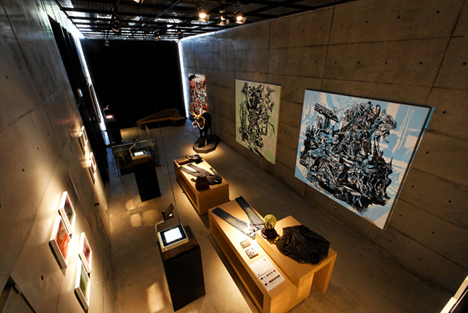 Diesel Denim Gallery in Tokyo, Aoyama mixes avant-garde art with a selection of premium Diesel clothes. “Instead of going to sign a deal with a famous artist [...] we think that if we start from scratch and build a relationship with new upcoming talent, we can gain status.” (Japan Times, August 23rd, 2007, Staying casual in Minami-Aoyama) Other fashion luxury brands to co-opt the art world include Paul Smith (http://www.paulsmith.co.uk/personal/space-gallery/, accessed 20.01.2008. The shop is spread over 4 floors with a gallery set on the 4th Floor. In the ‘Space’ Gallery, a varied line up of British and European artist, photographers, and product designers are exhibited. See SuperFuture Online, http://www.superfuture.com/city/reviews/review.cfm?ID=309, accessed 20.01.2008), Gucci and Louis Vuitton, with its famous “The Culture of Branding” show in collaboration with the artist Murakami Takashi. Currid (2007) considers these cooperations built on the fact: “[...] underneath the glamour and frivolity of art and culture are real social and economic mechanisms [...]” (Currid 2007: xi)
Other concepts include to move a whole brand upscale, as seen in the case of Isetan, a department store targeting male customers. By lining up high-end items on the top-floor of their store in Shinjuku as though they were museum pieces, they want to attract customers. The idea proved extremely successful by adjusting the product portfolio to the middle-aged male customer who seeks to make a fashion statement (The Nikkei Weekly, November 5th, 2007, Retailer finds way into men's wallets: 20). Ace Gene started in February 2007 to polish its luxury image and achieved a big increase in its profit margins by equally moving upscale (The Nikkei Weekly, September 3rd, 2007, Sales gains of 10% are for sissies, p. 21. After opening its Hibiya flagship store, Ace Gene discontinued internet sales and stopped marketing through general merchandise stores, increasing the luxury image. Prices were raised by 25%. Domestic sales from February to June were 80% higher). Baccarat Pacific K.K., a subsidiary of a major crystal ware maker from France, has been showing rapid growth after changing its brand strategy from a producer of dish wares to a luxury brand. The brand created an environment which made the buying process more of a lifestyle experience (The branches in Marunochi and Roppongi are examples where this has been implemented. See The Nikkei Weekly, Baccarat Pacific K.K., March 26th, 2007, p. 20. Baccarat experienced a 300% sales gain from 1996 to 2006. The new strategy tried to nurture Baccarat as a luxury brand that serves many aspects of the customers' lifestyles. Some stores are now equipped with trendy bars where visitors have the opportunity to enjoy drinking with the glasses they choose. The bartenders are trained with product specific information and in the history of the brand).
The creation of flagship stores of European luxury brands started in 2001 with the $138-million La Maison Hermes and since then other luxury brands have followed the trend of engaging top architects to create spectacular shopping palaces. “Japanese refinement of the retail experience plus a general lack of attachment to old structures drives a style of shop development that has produced some of the new architectural temples of the century.” (Superfuture superguide Tokyo, online, http://supertalk.superfuture.com/supershop/superguides/superguides-tokyo.php, accessed 20.10.2008) The latest overseas brands to appear in the upscale shopping district of Ginza were Bulgari and Armani, both in November 2007. Having a presence in Tokyo is considered an important part in the image-creation and also a jumping point to other Asian luxury markets (Japan Times, October 15th, 2007, Upscale saloons pamper rich: 52).
Luxury brand online stores have created services for customers that are beyond the scope of the average shopping site on the internet. It becomes more important for luxury brands and fashion houses to improve their presence known online, leading to the emergence of a new generation of virtual Japanese shopping towns (Examples are megaseek for men/mfm, select square, zozoresort, and 109 men's net, see “Virtual Luxury”, Anterior Insight 2008. Fendi launched on September 2006 a 15 seconds Video Ad exclusively on style.com, making a step away from print advertising on billboards and in magazines. Virtual shopping itself to become the new retail medium for many high fashion and luxury brands).
Luxury companies should devise creative ways in which they can take shopping out of the usual context, giving consumers the opportunity to discover new things and experiences. In this way luxury brands are connected with emotional values of diverse consumer lifestyles by connecting with the specific 'triggers' that make a consumer's brand experience enriching and unique (The Financial Times, September 9th, 2007, What luxury means now; “Convenience Luxury”, Anterior Insight 2008; Danziger 2005: 30; Graham and Matthews 2004).
Subscribe to:
Posts (Atom)